.svg)
.svg)
 For Instructor
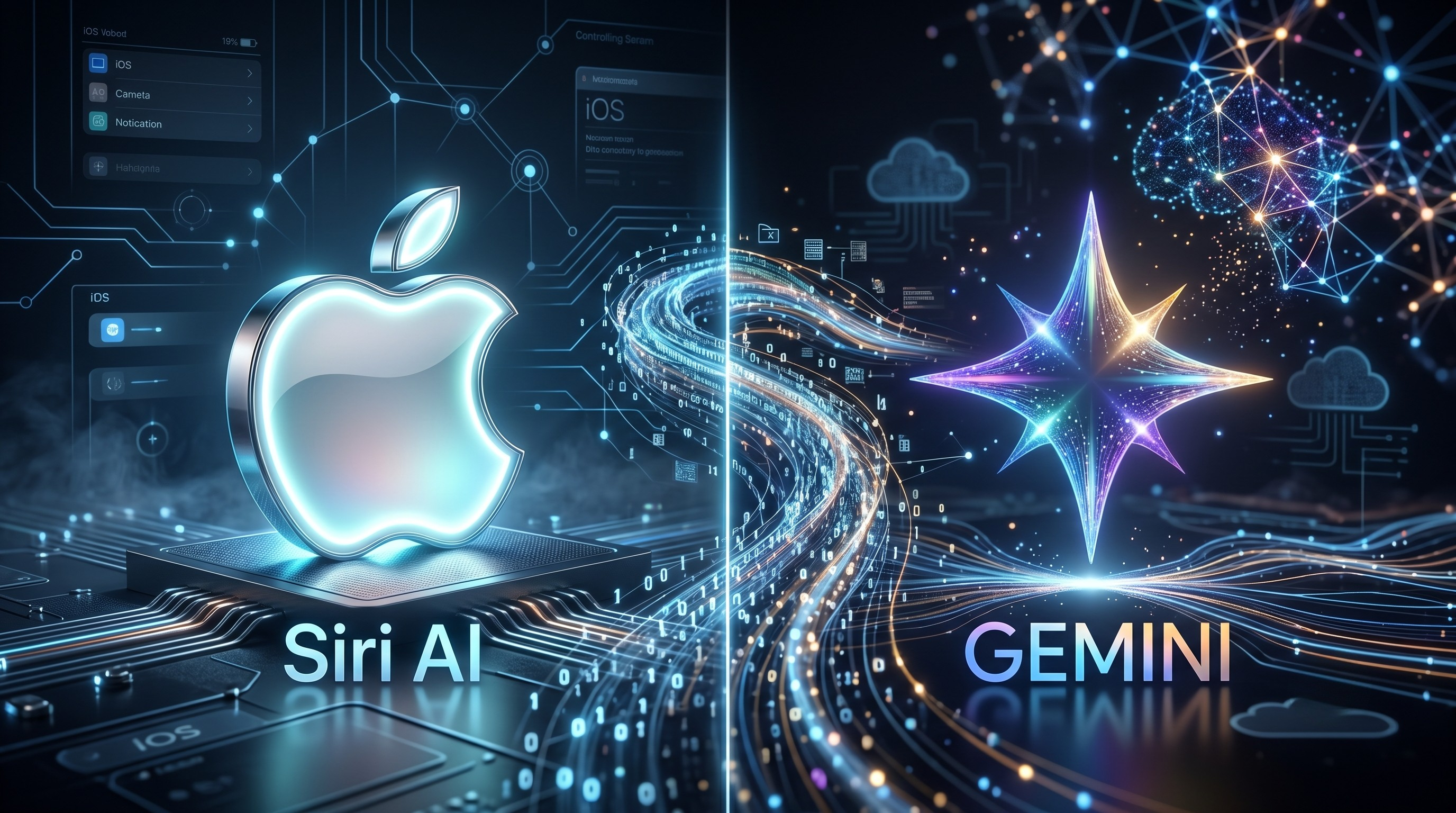
If we're going to be truthful for a moment, we have all had this situation occur before. You are in your car, your hands are full of groceries or you just want a straightforward, quick answer to a question. Because of this you use your iPhone and ask Siri a simple question only to rarely or almost never get an actual answer but to receive the dreaded and infamous response of "Here is the information I found on the internet regarding that."
For many years that was the standard experience with Siri. You would ask something and while you were looking for an answer; instead of asking your question to Siri and receiving an answer; Siri would basically give up and provide you with a list of Google search results with which you would have to look at yourself. In fact, the old version of Siri was incredibly frustrating. It was great for helping you set a timer while you were boiling pasta or for turning off your smart lights in your living room, but as soon as you started to get into anything complex or multi-layered; the illusion fell down completely.
Apparently, Apple finally decided enough was enough. They completely capitulated to the failure of Siri and instead decided to reach out to their biggest competitor, Google, for help.
Recently, at WWDC Apple took to the stage to announce an entirely redesigned and rebuilt virtual assistant which is going by the name of Siri AI. While much has been made of the flashy promotional display with its bright new glowing screen and litany of marketing jargon, what has really changed underneath the surface of Siri AI represents a dramatic departure from past Apple AI strategies.
The Secret Sauce: A Powerful Collaboration with Google
Apple has now confirmed the deep cooperation with Google to build the next generation of Apple's own foundational models. However, in keeping with Apple's traditional secrecy, they have yet to provide any specifics about how this collaborative effort will work or how much of their code they are going to share with Google. However, based on careful analysis of what was said during the keynote address, it is pretty clear that there will be significant contributions to the success of Apple's Foundation models through Google's Gemini AI platform and the code and software that was created by Google.
While it would be a surprise for Apple, a company that is well known for its prideful and isolated culture, to collaborate with Google in such a significant fashion, I think that this collaboration could be one of the best decisions Apple has made in a long, long time.
When you look at the current state of the AI which many of; as consumers, have grown accustomed to seeing and utilizing from companies like OpenAI, Google and Anthropic who have been moving at lightning speed releasing multiple AI models capable of writing complex code, producing entire essays or generating artwork, and performing deep analysis of dense financial data, you can see Apple has been lagging far behind, and by teaming up with Google, who arguably has the most advanced and largest collection of AI technology capabilities and potential available in the marketplace, Apple now won't need to spend the next 5 years trying to catch up, thus allowing them to leapfrog right to the front of the line with what 's already considered one of the best raw processing capabilities in the marketplace, have and custom wrap and integrate it with Apple's very sleek and user-friendly design.
Officially, these are still considered Apple models, as they are natively integrated within both iOS and macOS on your own local machine and executed from Apple's private cloud services, thus providing a superbly brilliant approach by utilizing Google's model of raw brilliance to enhance Apple's overall hardware architecture!
What Is The Capability of Siri AI?
The new Siri AI has arrived in a big way. This update represents a true transformation in how people interact with their phones.
One major feature is that the new Siri will now be able to carry on a conversation with someone. While Siri has always had the ability to have a conversation, this version can remember past interactions. If you tell Siri, "Check the weather in Chicago," and Siri tells you that it is raining, you can then say, "Make sure I take my umbrella with me to Chicago," and Siri will be able to make the associations to figure out that you are speaking about your Chicago trip.
But beyond the ability to converse with Siri, you now have the best of both worlds - the information can be live on the internet and presented to you in one paragraph. Furthermore, Siri is now able to literally "see" your screen. If your friend sends you an address to a dinner party, you can simply say, "Siri, get directions to this address" without needing to copy the address from the text and then paste it into Apple Maps."
Siri doesn't pass you over to an outside third-party app like ChatGPT every few seconds whenever it gets stuck trying to understand what the user is asking or searching for.
Siri can search through thousands of messy, old pictures and notes simply by asking questions in normal, everyday language. For example, if you ask Siri to "find me a photo of my dog wearing a red collar", Siri will instantly find that photo without you having to do anything.
Siri can also take different types of actions from within your apps such as create emails, add or edit text anywhere you type (including text messages), summarize long PDF documents, copy or move files from one folder to another, etc. You can finally think of Siri as a real digital assistant instead of just another voice-activated search engine.
The Elephant in the Room: Privacy
We are in the same boat: when you hear or see "Google" and "AI" in any relation to your private iPhone data/media you go off! Why? Because you know that Google is ALL about data, right?
This whole thing hinges on the fact that Apple takes their privacy very seriously, and that is what this whole announcement is all about: NO matter how much more powerful the new AI can be, Apple guarantees you that it will continue to operate within Apple's walled garden of privacy rules and guidelines.
Most of these everyday tasks, e.g., screen reading, photo searching and composing a quick text message, will be done ON your device (i.e., the data NEVER LEAVES the phone). However, if you want to perform some heavy lifting using AI (e.g., organizing your photo library via facial recognition), then you'll send a request to Apple's Private Cloud Compute (PCC) system and Apple will process your request on their secure private servers, and then send the answer back to you and delete it from their systems. Your personal data is NOT being given to Google to sell advertisements.