.svg)
.svg)
 For Instructor
We all have one. Somewhere in your house, probably buried at the back of a desk drawer or sitting in a dusty cardboard box, there is an old smartphone. When we upgrade to the latest model with a better camera or a sleeker design, our old devices are usually forgotten. Sometimes we trade them in, sometimes we recycle them, but millions of them simply go to waste.
But what if, instead of tossing these old phones into a recycling bin to be melted down for scrap metal, we could turn them into a massive, functioning data center?
That is exactly the question that researchers at UC San Diego asked themselves. And the answer they came up with is not just fascinating—it might just change the way we look at cloud computing and electronic waste forever.
The Hidden Power in Your Pocket
To understand why this works, we have to look at what a modern smartphone actually is. We call them phones, but really, they are pocket-sized supercomputers. The processors inside a smartphone made in the last few years are incredibly powerful. In fact, the research team found something quite wild: the processing power found in a modern smartphone can match, or even beat, the core performance of a traditional data center server on most standard benchmarks.
Think about that for a second. The device you use to scroll through social media and play casual games has the raw computing muscle to rival the expensive, power-hungry server racks sitting in massive corporate data centers.
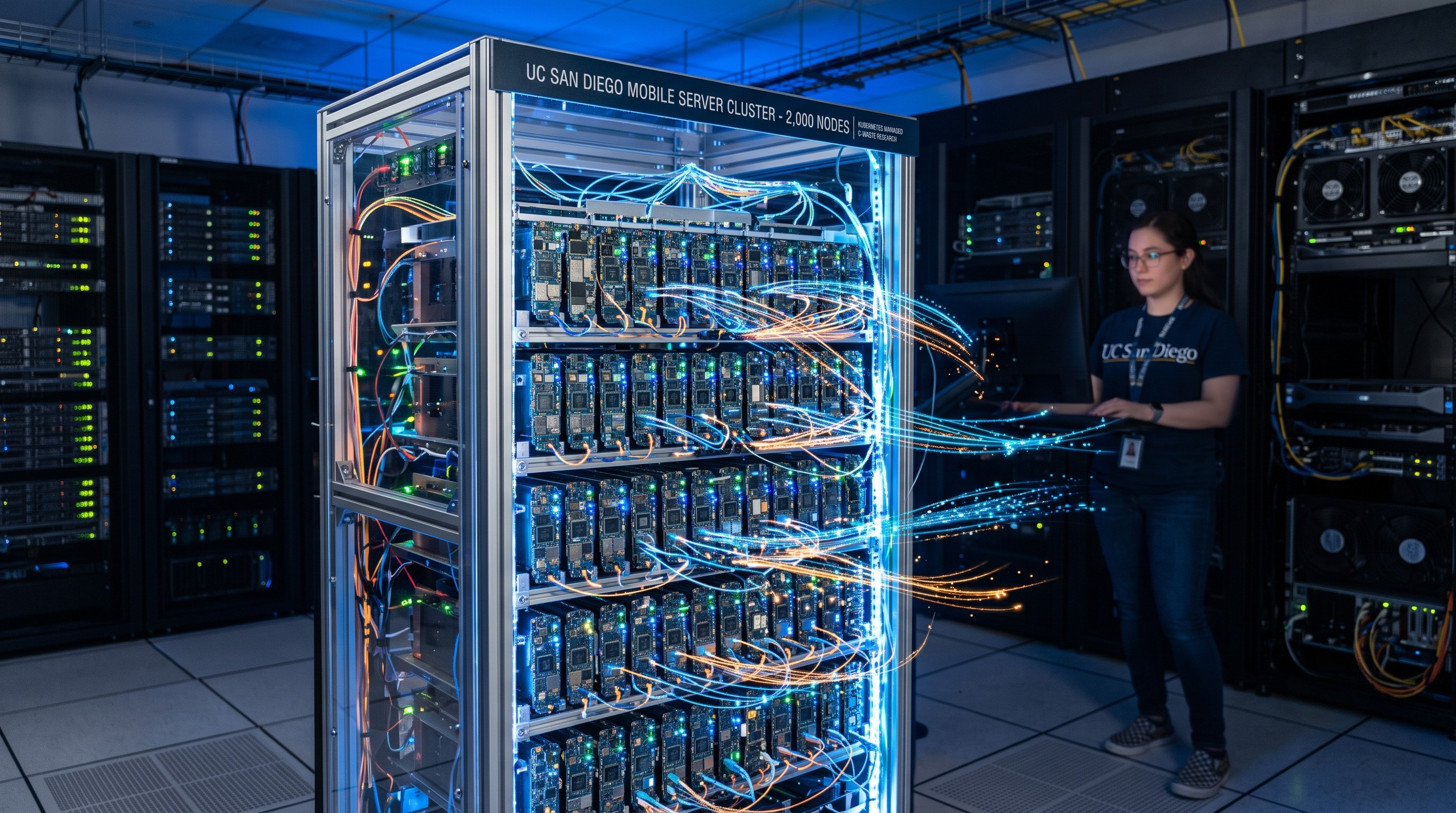
So, if these phones are so powerful, why are we throwing them away? The UC San Diego team decided to put that wasted compute power to the ultimate test. They set out to build a data center completely out of 2,000 old smartphones.
The Anatomy of a Smartphone Server
You cannot simply plug a bunch of old iPhones and Androids into a wall, tape them together, and call it a server. It takes some serious engineering to bridge the gap between consumer electronics and enterprise-grade hardware.
Here is exactly how the researchers stripped down these devices and gave them a new life:
- The Teardown: First, the phones were completely stripped down. A data center does not need to take selfies or display a high-resolution video. The researchers removed the screens, the batteries, the cameras, and the casings. They took away absolutely everything you don't need, leaving behind only the most essential component: the motherboard containing the processor and memory.
- A New Brain: Smartphones are designed to run mobile operating systems like iOS or Android. To make them function like a server, the team completely wiped the devices and replaced the original operating systems with Linux, the gold standard operating system for servers worldwide.
- The Cluster: A single smartphone motherboard is powerful, but a data center needs to handle massive workloads. To solve this, they clustered 20 to 50 of these stripped-down motherboards together. To make them all talk to each other and share the workload seamlessly, they used Kubernetes, a popular open-source system for automating and managing computing applications.
Through this process, the cluster of scattered phone parts essentially became one modern, highly efficient server.
Beating the Industry Giants
The concept is incredibly cool, but does it actually work in the real world? The UC San Diego team decided to put a small-scale prototype to the test before launching the full 2,000-phone system.
They set up a test cluster using just 20 old phones. They then assigned this tiny cluster a heavy computing workload: processing the peak grading load for a science computer class of 75 students.
The results were absolutely staggering. Not only did the 20-phone cluster handle the workload without breaking a sweat, but it actually performed faster than Amazon Web Services (AWS) in this specific scenario. They took discarded trash and outperformed one of the biggest, most expensive cloud computing networks on the planet.
The Massive Environmental Win
Beyond the impressive speeds and low costs, the most important aspect of this project is the environmental impact.
Building a traditional server requires mining precious metals, manufacturing complex components, shipping them around the world, and assembling them in energy-intensive factories. The carbon footprint of building a single new server is massive.
By using old smartphones, the manufacturing carbon cost is practically zero. The hardware already exists. The carbon was already spent years ago when the phone was first made. Instead of generating more e-waste, this project actively reduces it by intercepting these devices before they hit a landfill.
Furthermore, mobile processors (built on ARM architecture) are designed specifically to use as little battery power as possible without sacrificing speed. This means a data center made of phone parts uses significantly less electricity to run and requires far less cooling than a traditional server farm.