.svg)
.svg)
 For Instructor
Have you ever looked up to the night sky and wondered about what’s up there in the deep and dark expanse of space? Most of the time, we think of space as static and immutable. When we look at the stars tonight, they’ll appear just as they did when we were children, right? Well, the reality is the universe is extremely dynamic, busy, dynamic and diversely ever-changing. Just that; the timeline that space operates on is much, much longer than what a human can perceive.
Fortunately, we have some very, very powerful eyes to help us see it.
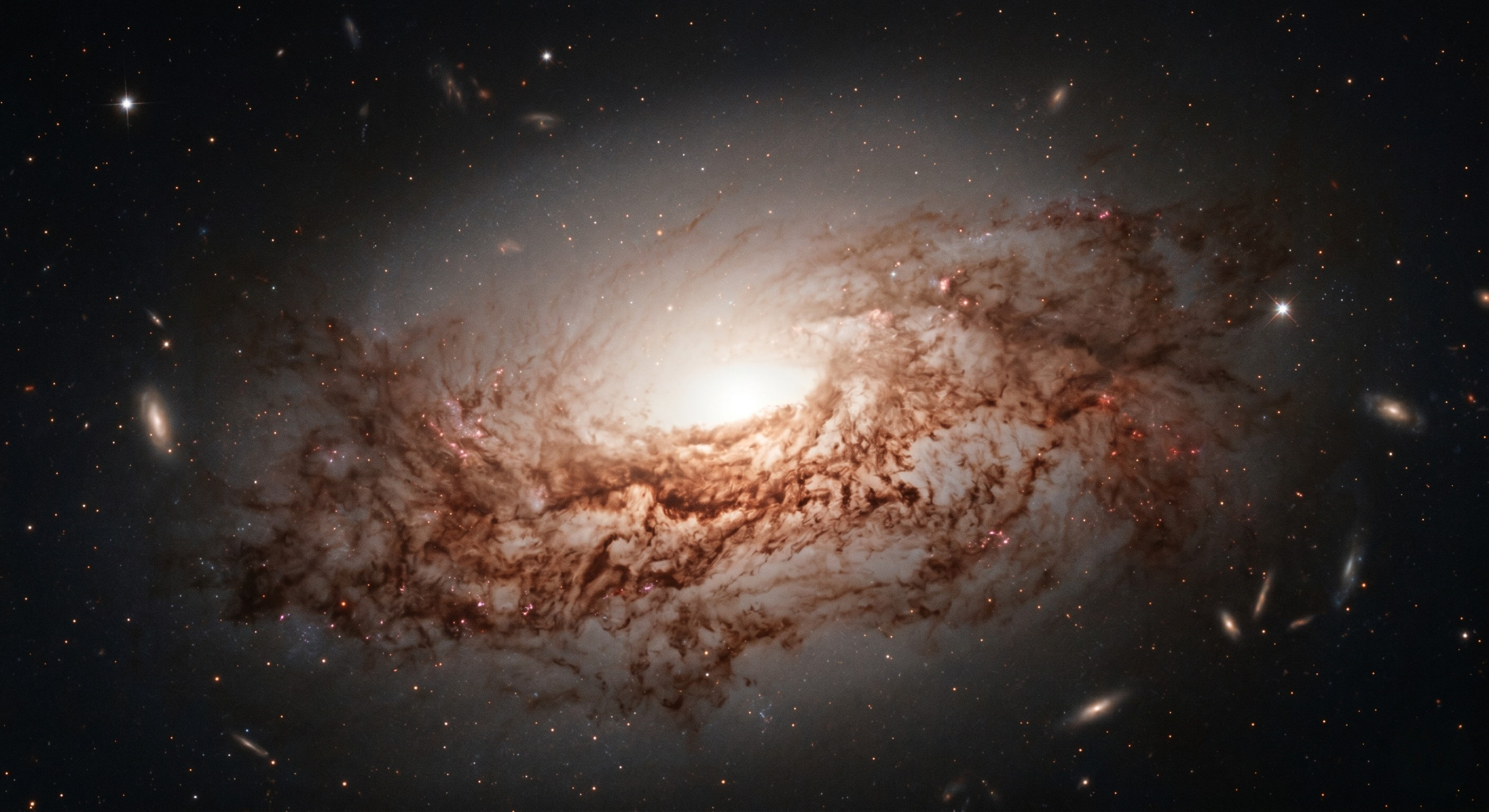
NASA’s HST is one of those powerful eyes. After floating in space for decades, HST continues to make us all look like fools by capturing images like none other. Not long ago, HST looked toward the constellation Eridanus and captured an amazing picture of an incredible galaxy known as NGC 1266.
NGC 1266 is an extraordinary distance from Earth at roughly 100 million light-years, and NGC 1266 is producing a lot of buzz in the astronomy world. Why? Because it is in the middle of a very transitional period in its lifetime between galactic being.
A Snapshot of a Mystery
When you take one glance at the new Hubble image of NGC 1266, the very first thing you notice is how amazingly beautiful it is. The photograph depicts an extremely bright and brilliant centre, which is actually the nucleus of the galaxy, surrounded by dense, rotating clouds of reddish-brown dust. In addition, within the fainter outer regions of the galaxy, if you look hard enough, there will also be faint images of much more distant galaxies visible shining through.
Yet for astronomers this image is more than just a nice picture; it is a mystery.
Astronomers classify galaxies in terms of their shapes when they study galaxies. One type of galaxy that you have likely seen is the spiral galaxy, which is commonly known as the Milky Way Galaxy. The spiral galaxies have a very bright nucleus, with beautiful sweeping spiral arms (containing incredible amounts of stars, gas and dust) spiralling outward, like a huge cosmic pinwheel.
Lenticular galaxies are neither elliptical nor spiral, and NGC 1266 contains characteristics of both.
An elliptical galaxy is a large, rounded collection of older stars. It lacks the flat shape of a spiral galaxy as well as the exquisite, winding arms, and it is comprised primarily of older stars with little to no ongoing stellar formation.
Where do you think NGC 1266 fits within these classifications?
This is the tricky part: NGC 1266 fails to fall into either classification completely.
When observed, NGC 1266 bears a strong resemblance to a spiral galaxy in that it features a bright, centrally located bulge and what appears to be a flattened disk of material; however, NGC 1266 lacks the defining characteristic of any spiral galaxy - its well-defined spiral arms.
As a result, NGC 1266 has been classified as a lenticular galaxy based upon its features.
What is a Lenticular Galaxy Specifically?
If galaxies were a family, the lenticular galaxy would be the unappreciated middle child.
In terms of cosmic evolution, the lenticular galaxy is usually regarded as the transitional phase of a vibrant, young spiral galaxy to a quiet, old elliptical galaxy. The term lenticular refers to the lens-like shape of these galaxies when viewed edge-on — they will look like a very large glowing lens in space.
This is a basic overview of the evolutionary process of galaxies:
The Energetic Youth – (Spiral): A galaxy begins life filled with gas and dust, rotating quickly, forming the flat disk and spirals. There are stars being produced at an incredibly high rate and the galaxy is constantly creating new stars.
The Middle Age – (Lenticular): After billions of years, the majority of the gas used for star formation will be exhausted, causing the spiral to lose its definition and leaving behind a bulge and flat disk (the galaxy is settling down).
The Seniors – (Elliptical): Finally, the disk may disappear completely due to collisions with other galaxies, creating a giant, rounded, cluster of stars that are all nearing the end of their life-spans, with very little or no star development left.
By classify NGC 1266 as a lenticular type galaxy, scientists are really saying that this galaxy is in the transitional state between being a spiral and being an elliptical. It has lost its spiral form but has not yet completely developed into a matured elliptical.
The "Post-Starburst" Phase: A Retirement of the Cosmos
Another aspect that is the most intriguing about NGC 1266 is that NGC 1266 is not only an ordinary lenticular galaxy; researchers have classified this galaxy with a very specific, rare classification known as a "post-starburst."
To understand what this means, let's first discuss how stars are created. Stars form in large cold clouds of gas and dust. When a galaxy has ample amounts of raw materials, the galaxy can enter into a phase known as a "starburst," meaning the galaxy is generating new stars rapidly and at an extremely high rate.
However, the starburst phase will come to an end eventually because the galaxy will have reached the end of its available fuel supply. The large amounts of energy created from the many massive stars forming at a very quick rate combined with stellar winds or even supernova explosions from those rapidly forming massive stars will blow the remaining gas out of the galaxy, which effectively will cease the star formation process.
When the galaxy goes from an active phase of forming stars to a dormant or inactive state, the galaxy is referred to as a post-starburst galaxy. NGC 1266 is currently in the so-called "Cosmic Retirement" phase. It has completed the earlier part of its stellar formation activity and is now in the stage of transitioning to a dormant state.
Why is it so uncommon?
The search for a post-starburst galaxy is like searching for a needle in a cosmic haystack. Only one percent of the neighbouring galaxies that we can observe are currently in this transitional phase, according to astronomers.
The reason this type of galaxy is so rare is that most astronomical changes happen slowly; however, the transition from starburst to dormancy occurs rather quickly compared to the age of the universe. When we look for post-starburst galaxies, therefore, we need great luck and an extraordinarily powerful telescope when we examine them at such an inopportune time (during the time of their retirement).
The Hubble Space Telescope: is an amazing piece of technology and has been one of the most important tools in astronomy. Hubble was put into orbit around the Earth in April of 1990 and has been observing space since then. This has allowed us to see some of the best pictures of our universe that would not have been possible without Hubble. Hubble is in space above the Earth’s atmosphere, which makes it so much clearer (the atmosphere distorts light) than ground-based telescopes.
Even though JWST (James Webb Space Telescope) has been launched and is an amazing new instrument with some of the best capabilities for observing the cosmos, we still need Hubble to get the best information about our universe. JWST is an infrared telescope that can “see” through dust clouds to see what is hidden beneath. Hubble is designed to see visible and ultraviolet light (light that humans can see).
By using both Hubble and JWST, scientists can create a more complete view of galaxies like NGC 1266. By combining information from both Hubble and telescopes like JWST, we can get a more complete and layered understanding of the universe we inhabit.