.svg)
.svg)
 For Instructor
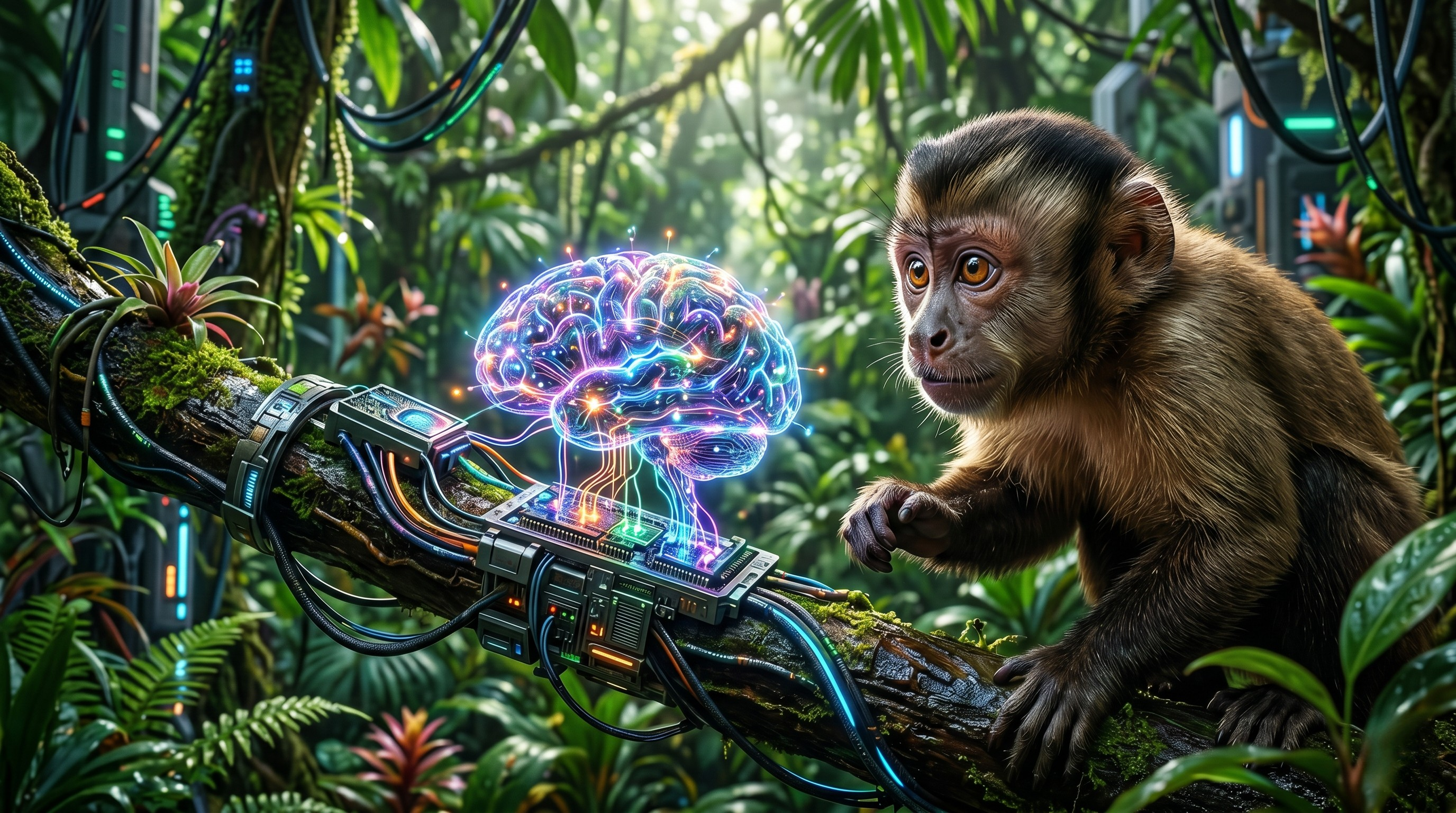
All right, let’s get real. When you think about artificial intelligence, you either have an image of an advanced machine that takes jobs (the end of mankind as we know it) or an image of the dumb chatbots we’ve all been frustrated by over the last few years.
Do you remember the dumb old chatbots? Honestly! Seriously! If you asked them a complex question, they would just loop around in circles like a kid who can’t find out how to get to the next level of a Super Mario video game or give irrelevant answers completely unrelated to your question. Fast forward 3 years, and now we’ve gone from glorified paperweights (bots) to sophisticated LLMs (large language-modeled AIs) that can help us build programs, write a poem, create music, and even pass the bar exam.
How did this come about?
When research started to combine multiple different ways of developing intelligent models, they ended up finding around 10 different ways of making LLMs smarter. Here’s the great secret that NO ONE is talking about – YOU can train YOUR brain with those same techniques that were used when building LLMs! These techniques to create intelligence can be applied to humans just like they can be applied to LLMs.
The reason being, you have something in your head that operates very similarly compared to today's AI powered by artificial neural networks. You have maybe 100 million neurons in your biological brain and about 100 trillion synaptic connections. AI architecture was originally created based on how biology built the human brain. The architecture of the AI is built on the same underlying concepts as the architecture of a biological brain, it's not just a metaphorical idea.
To teach you how to leverage the biology of the human brain, we are going to need a test subject. So, let me introduce you to a "volunteer" test subject – a monkey. He's a little bit dumb, confused and relatively sub-par compared to a person so we'll call him Mr. Dimwos. Mr. Dimwos is special and will eventually become highly intelligent but he's far from the end point right now. Fortunately, we looked inside Mr. Dimwos' brain and have the foundation of the architecture needed to build all ten techniques.
We will take the exact method for turning AI into a powerful tool and we will apply that to Mr. Dimwos as well.
Stage 1: Data Preparation (ThePIW effort)
Building a new Machine Learning model starts as a blank canvas. Scientists then provide their new ML model with vast amounts of training data...all the information contained in Wikipedia, Books, Articles, Websites, etc. They now have their Training Data prepared. They also need to teach the machine the basic rules of theNatural Language Processing (NLP) Structure and Fact Database duringthis time.
We will also ensure that Mr Dimwos goes through training by exposing his mind to the entire jungle, giving it the opportunity to learn River Physiology, Tree Growth, and Predator Behavior through a variety of experiences for several years; for you, this means reading the widest variety of material possible (unstructured) giving time to learn several ways to communicate and build a base of knowledge so you can become an expert in one field after you accumulate enough information. Read broadly, listen to other people's podcasts, and learn about things that are different from what you typically do or believe. Build Your Own Knowledge Base!
The second stage of an AI's reading process is the Tokenization (breaking the world down) stage. Unlike humans, an AI doesn't "read" words in the way that we do. It "breaks" words down into tiny portions called 'tokens' and breaks down very complex things into their smallest most accessible format for easier processing.
For example, when Mr. Dimwos looks at the big picture of a complex fruit tree, he could be overwhelmed by everything about the tree. He needs to learn to break the tree down using the process of tokenization. This means he will first look at the tree branch; then look at the tree leaf; finally, look at the tree fruit. To convert this concept into a guy, when you want to learn an entire body of skills (for instance, learning to speak a new language or coding) instead of looking at the entire mountain, you should break everything down to the smallest possible tokens. Learn one syntax rule; learn three vocabulary words; digest the entire universe in chunks.
stage 3: The Transformer Architecture: Attention Mechanism: Finding "Signal" Amongst The "Noise".
The most significant/general advancement in AI technology today is based on the concept of "Attention Mechanism (within Transformer Architecture)." The AI now has a way to read an enormous amount of textual data and determine which are the most relevant surrounding words and phrases available to address a given issue at that moment. It can also ignore all irrelevant information (the “fluff”).
Mr. Dimwos needs to learn the ability to "attend" when he hears rustling in a bush. When he hears a noise like this, he must learn to focus on just the pattern that indicates that it may be a "tiger" and ignore everything else (the wind). As humans, we are often quite poor at "attending." We allow ourselves to be distracted by unwanted, intrusive inquiries, text messages, emails, among others.
If you wish to expand/enhance your knowledge, you must train yourself on to properly use your Attention Mechanism. You need to consciously practice keeping your focus on the key variable(s) associated with an issue and completely disregard any other sounds, movements, etc. that may occur around that focus.
When an AI reads the internet, everything is very intelligent but also incredibly random! So, it does not know what a polite answer is to a question or how to write content in a structured format. Therefore, people come in and show them thousands of examples of what someone should respond with when asked a question "If someone asks X, respond with Y".
For the "monkey", this is the phase where we get to hold his hand and show him how to hit a nut over and over (by hitting it with the rock). In the case of your brain, being Supervised Fine Tuned involves having a Mentor or having a Plan that has delivered results repeatedly to others. As a result, you will have a definite path to follow in creating the same results that others have created.
Stage 5: When AI makes a prediction that turns out to be incorrect, the AI undergoes a process called backpropagation. This is a mathematical process that sends a signal back through the entire neural network, adjusting the weights of all connections in the neural network so that the AI doesn't repeat that same mistake again in the future.
A good example of this is when Mr. Dimwos accidentally touches a thorny bush (ouch!), and as a result of his pain, he updates his biological neural network to remember not to touch that bush again. However, what we see with humans is that many times, this process of learning from failure and adjusting their approach according to the failure does not happen. Many people avoid talking about their mistakes when they happen out of embarrassment or other reasons instead of finding out why they failed and correcting their approach for the next time they are in a similar situation. To become smarter, you need to be able to embrace the principle of backpropagation because failure ultimately serves as the opportunity to reprogram your brain (i.e., improve your performance). If you fail, take the time to consciously go through your thoughts around what you did wrong and how you would do things differently in the future. Remember that failure is an update to your software.
Stage 6: Reinforcement Learning Through Human Feedback (RLHF) is a stage where AI becomes supportive and useful. Humans provide feedback to AI through interaction (i.e., answering questions), ranking the responses provided by the AI, and providing both positive and negative rewards. As a result, the AI modifies its actions to achieve the highest total reward.
Mr. Dimwos gave an apple as a form of positive reward for receiving assistance with his grooming needs – i.e., an apple was given in consideration of receiving help from another monkey with an important need. You can think of RLHF as a process for you to seek constructive criticism about your work from co-workers. Publish your work somewhere for other people (the public, your employer, or members of your target market) to provide feedback when the draft is published. Use this feedback when making decisions about how you will perform jobs in the future. in the AI development process focuses on expanding the context window to allow for greater memory capacity. Earlier generations of artificial intelligence had a limited amount of memory available for recalling conversation content (e.g., only able to retain two to three short paragraphs). Today’s AIs are capable of recalling an entire book’s contents within a single context window.
Mr. Dimwos has gone from being able to recollect only a single fruit tree to being able to visualize an entire forest's layout. For humanity, this development translates into expanding our working memory and mental models; we achieve this by systematically building connections among various ideas or areas of knowledge. For example, if we want to develop successful sales techniques, we must learn how to combine our knowledge of marketing with that of psychology in the context of what makes people want to buy things.
Stage 7: AI development process focuses on expanding the context window to allow for greater memory capacity. Earlier generations of artificial intelligence had a limited amount of memory available for recalling conversation content (e.g., only able to retain two to three short paragraphs). Today’s AIs are capable of recalling an entire book’s contents within a single context window.
Mr. Dimwos has gone from being able to recollect only a single fruit tree to being able to visualize an entire forest's layout. For humanity, this development translates into expanding our working memory and mental models; we achieve this by systematically building connections among various ideas or areas of knowledge. For example, if we want to develop successful sales techniques, we must learn how to combine our knowledge of marketing with that of psychology in the context of what makes people want to buy things.
Stage 8: Prompt Engineering (Asking the Right Question)
An example of how bad prompts create bad output or product is when you provide a horrible or simple prompt to AI and it will give you horrible or simple output or product from the AI. On the other hand, if you give AI a cleverly formed or a detailed prompt for something, AI will produce something from the level of genius. Therefore, the level of intelligence that an AI has is dependent upon the kinds of questions that you ask it.
Just like an AI computer, your brain works in this way. If Mr. Dimwos sits around contemplating, "Why do I always feel so hungry?" his brain will continue to generate uncomfortable feelings. However, if Mr. Dimwos poses a question such as, "Where could I go right now to find the most grubs quickly/easily," then Mr. Dimwos has just computed a possible solution to his problem using his brain. Therefore, the level of quality or value of your life and intelligence is proportional to the level of quality of the questions that you ask your own mind.
Stage 9: Adjusting the Temperature (Logic vs. Creativity)
In artificial intelligence settings, there exists something called the "Temperature dial". When you set the temperature to zero, then AI will be highly logical, always giving you the same answer every time. But, once you start increasing the temperature towards one, it becomes much more creative/wild and unpredictable.
For Mr. Dimwos, if he is climbing a dangerous cliff, he needs a low temperature. If he is creating a new board game for his friends, then a high temperature is required. You need to learn to consciously change your brain's temperature depending on the situation you are in. When preparing your taxes, you need to stay strict and logical. When coming up with a new business idea, allow your mind to run wild, make crazy connections and enjoy the lift of an element of chaos!
Stage 10: Deploy your AI model to the public. You've created a prototype of an AI application. You have now built the most powerful AI (artificial intelligence) application ever seen.
Mr. Dimwos is now ready. He has all of the information he needs, a focus on success, a correction of errors, and some creativity. He walks into (and across) the jungle as the king of the jungle and not as a dimwitted monkey.
You can read all of the books and take all of the classes you want; however, you will still have to deploy your model when you are done. At some point, you will have to get your brain out of your head and into the real world by launching your business, writing a book, or applying for a job.