.svg)
.svg)
 For Instructor
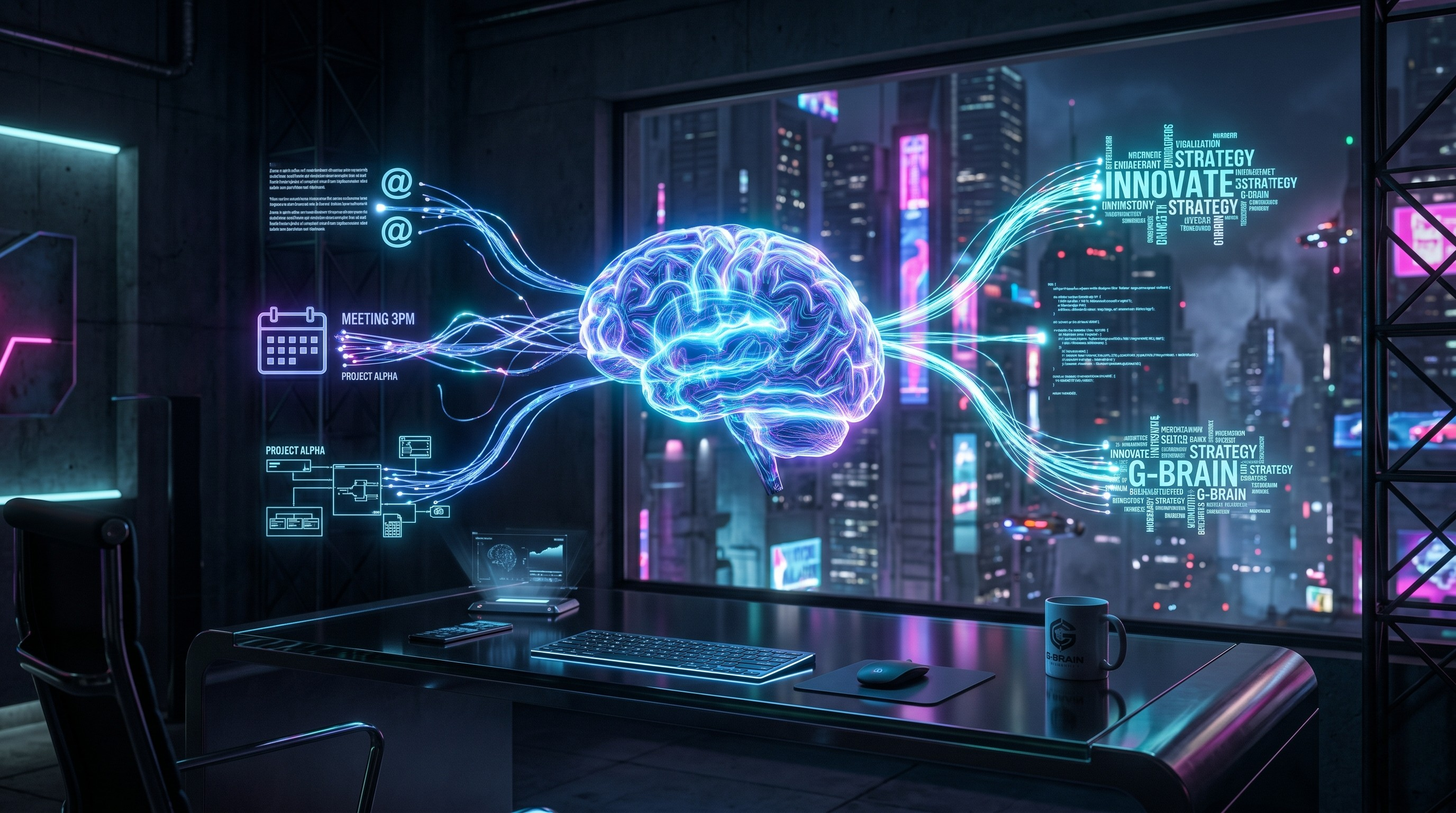
How great would it feel to roll out of bed in the morning, brew your first cup of coffee, only to discover that while you slept, your digital clone had been up all night working for you? Your digital clone would have read through hours upon hours of meeting notes, deciphered dozens of complex email threads, stored the details of conversations you have had weeks or months before, and have been connecting all of the people and businesses that you have been in contact with.
This may sound like a scene from a sci-fi movie, however, this is a real-world scenario that is happening today.
This is not just theory and hype, it is happening EVERYDAY, NOW! Garry Tan, Y Combinator's President (Y Combinator is one of the most successful accelerator programs in the world), has found the solution to this question. He has created G-Brain, a digital representation of Garry on GitHub. It is currently being adopted rapidly throughout the technology worry. G-Brain has gone completely viral already, with over 5,000 stars from developers who want to see how this works, and they want to be involved in the development of G-Brain.
This goes far beyond being a fun gadget for those who like technology; it's driven by major changes in the way we handle information, schedule time, and manage people. Y Combinator has also put "The Company Brain" on its official list of startups it wants to invest in this year, as they see this as a critical need for every business around the globe within the next few years. Let’s review what G-Brian is, why it is important, and how it can transform your company.
The G-Brain: An Overview
This magnitude can be appreciated through statistics. An AI has been created for Garry Tan, who has input 17000 pages of information from past meetings, emails, network connections, and company profiles.
To conceptualize how much data that is, it would take a person several years to read and digest that many pages of business-related material; therefore, their retention of the information would be very low. For example, you may forget information you read or lose track of your email correspondence. You may even misplace your minutes of a meeting or other documents related to that meeting.
G-Brain does not have this issue because it functions as a virtual agent, scanning the 100 million page repository and categorizing its contents, identifying correlations between material, and then allowing users instant access to that content.
As an example, if Garry Tan needs to remember the email that he received from a founder three years ago,or needs to remind himself of key items discussed at the last quarterly board meeting, he does not have to spend hours looking through his email or searching through folders. He simply asks G-Brain.
Tan's release of this technology as an open-source project provides the entire world with a template for building an individualised, all-knowing digital assistant that knows everything about its user. Developers and business owners can study the code from GitHub, observe how the AI agent processes the information, and then customise it to meet their needs.
Bringing the "Company Brain" alive
A personal AI "brain" can be a powerful tool for any manager. When you apply the same concept across the entire organization, that is where true magic happens, and what Y Combinator refers to as "The Company Brain" will take the organization's performance to the next level.
Consider this: how much knowledge is currently lost or silo'd within your organization? If you have a top sales rep who has a unique way of handling customer objections, they've developed this skill through their experience and it exists in their mind. Your operations manager has created an enormous spreadsheet that facilitates your office's entire supply chain; there is no one other than him or her who knows how to manage this resource, and it is therefore lost to your organization if they are out of town on vacation. If your hiring team has over 1,000 transcripts from candidates who have interviewed with your organization, it will be very difficult to locate a candidate who had a very specific skill set even if you stay within the last six months.
So, how do you realize the Company Brain? Very simply, it functions as a central repository for every piece of company generated data. The Company Brain collects your internal wikis, Slack messages, customer service tickets, transcript and established procedures throughout the company; and, through leveraging the entire company experience, it becomes a living and accessible resource for the entire company.
A new employee does not have to constantly ask senior staff members questions every day. Instead, they can ask the Company Brain questions such as "How do we process refunds for VIP customers?" or "What was the rationale behind us not partnering with Vendor X last year?" The AI will provide them with timely access to the original context of the decision, the relevant documentation related to the decision, and the result of the decision.
Calculating the Time Savings: Operations, Sales, and Recruiting
The results from using a system similar to this are huge. Let’s examine a real world situation. Picture a large business — let’s call them 100x Engineers — that created their own internal brain (or system) for operations, sales, and recruitment.
Sales Teams: Salespeople spend a ton of their week doing administrative tasks (like taking notes in their customer relationship management programs, writing post-call follow up emails, and trying to remember what the prospect has said during the discovery call). When the Company Brain connects to their meeting software, it transcribes the call in real-time, extracts the key action items from the call, creates a customized follow-up email and updates your CRM. If a sales rep interacts with a previously lost lead, they can ask the Company Brain to provide a brief history of all previous communications between both parties.
Recruiting Teams: Recruiters look through hundreds or thousands of resumes and conduct a million screening interviews. With the assistance of the Company Brain, recruiters can immediately search for previously submitted candidates that may have applied for the new role. They can also analyze candidate interview transcripts to determine which questions have a direct correlation to successful candidates. In other words, the Company Brain does the heavy lifting of data analysis so that recruiters can tend to the human element of recruiting.
Operations Before Creating the Brain:
Prior to implementing the Brain, the Operations Team used an excessive amount of time searching for Standard Operating Procedures (SOPs) and responding to repetitive inquiries from other members of the team. Additionally, if there was an unresolved problem (or edge case), they would need to find out how the issue was resolved in the past. Currently, the Brain performs these functions seamlessly. The Brain has ingested every single document, historical ticket, and internal memo that was created by the company. As a result, the Operations Team can now pose requests about logistical concerns directly to the Brain. The Brain will then provide the Operations Team with the document(s) that define the appropriate procedure and protocol to follow. Tasks that previously required that 30-minute scavenger hunt (to find the appropriate SOP) now will only require three seconds!