.svg)
.svg)
 For Instructor
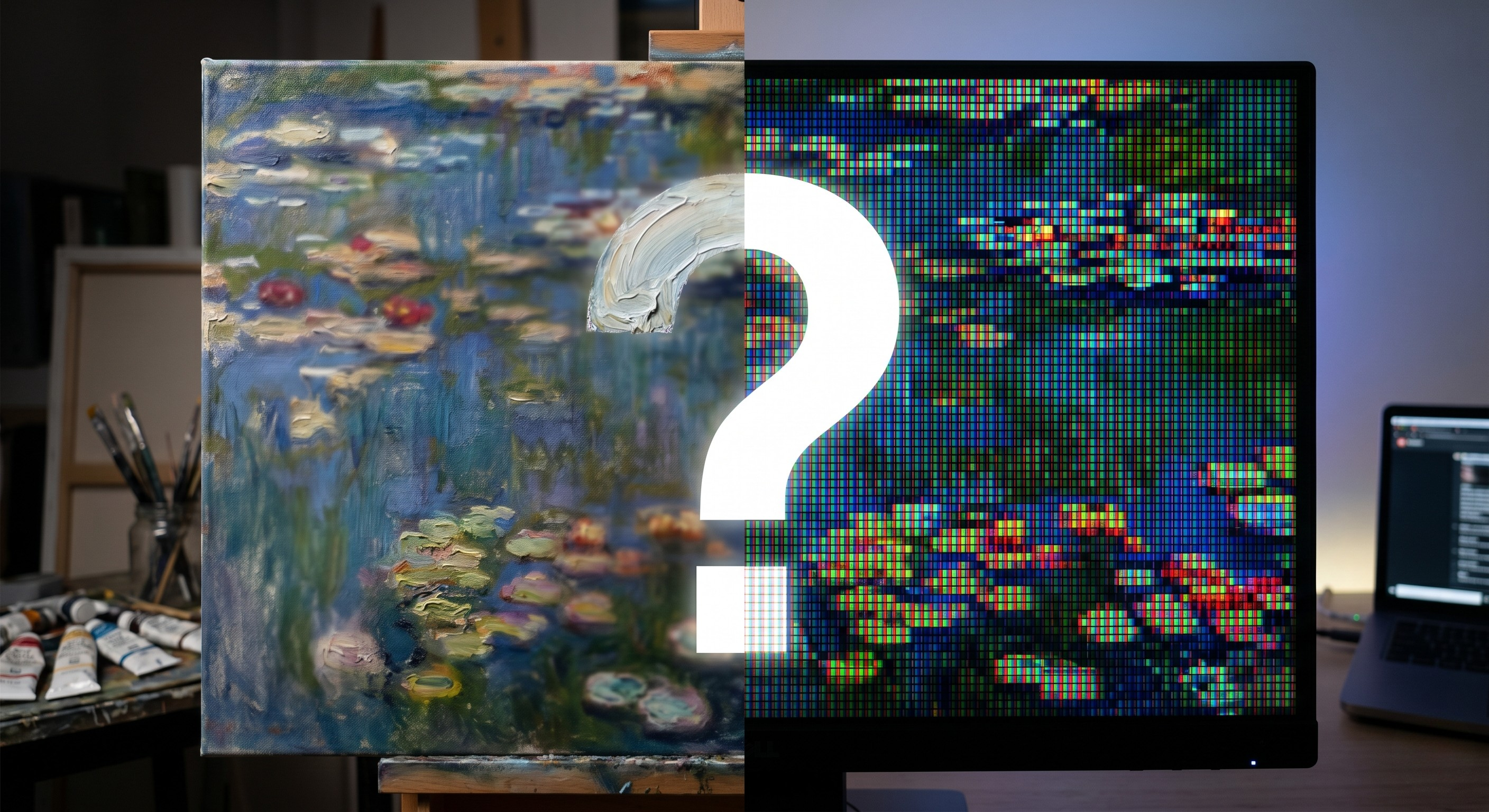
We have officially reached a bizarre moment in the history of mankind.
A few days ago, an amusing (and perhaps a little crafty) artist on X conducted a simple (but fun) social experiment: He posted a painting created by Claude Monet (the famous impressionist painter from France) and told everyone it was AI-generated. He posted a second Monet underneath and called this one the “actual” one to compare it to the first.
The idea was pretty basic: “Look at the AI garbage and the real deal!”
As you might guess; there was an utter slaughter.
So-called art ‘experts’ and digital artists along with some average Joe’s messaged in the comments section and ripped apart the first painting. They described it as a “soulless” creation. They said it had “no depth or cohesion.” One person even said that it looked like a “bad school project.”
As seems to always be the case here; there’s just one problem: They were ripping apart a true masterwork.
The Blind Spot of AI Slop
This incident demonstrates how the current condition of our group mindset can be clearer than a simple humorous "gotcha" moment. We have developed such a strong dislike for "AI slop" that we have created false perceptions of failures in true human creation.
When people viewed the label "AI", their minds instantly began searching for any reason to despise it. They searched for any tactile clues such as an unnatural edge, non-intentionality or an overall feeling of "uncanny", and they found them because they were searching for them even when those feelings did not exist!
This is a perfect example of confirmation bias. When you tell someone that a glass of wine is worth 500 dollars, they will tell you they can taste the oak and the historian notes in it. Conversely, if you say to them that it is from a box, they will tell you that it is taste like vinegar. We do not just perceive with our vision; we just perceive our expectations.
The Death of "The Eye"
The potential loss of our ability to perceive and appreciate the beauty created by humans is perhaps the most alarming outcome of this study.
For some time now, we've asserted that AI will never be able to create works of art that possess the "soul" associated with an individual artist. In doing so, we contend that the touch of a human hand will always provide that special element—an intentional imperfection—that cannot be replicated by a machine. However, if an artist can no longer tell the difference between a product created by a human versus a product created by an algorithm, then does this argument still hold?
In fact, has our intense disdain for AI to this point distorted our ability to see and appreciate art in the first place?
“We no longer appreciate the art when we only consider the label; when we do so, we lose what gives the art meaning: the emotional bond we have with the art.”
What Is Our Problem With AI Art?
Researchers have been researching this subject for some time now. There has been a studied phenomenon called "anti-AI bias," which refers to the idea that, on average, people give lower ratings to works of art made by computers than they do to works made by human artists.
This makes sense for a few reasons:
Exploitation: Many AI systems are trained* to produce artwork using work from artists without permission.
Effort: According to the "labor theory of value," something that took 100 hours to create is more valuable than something that took 10 seconds to create.
Humanity: Humans have a need to believe that there is an element of magic involved in being human that AI cannot replicate with its graphics cards.
However, when this bias gets strong enough that we start calling a "soulless" Monet, we've moved beyond the concern for protecting artists into the realm of total despair.