.svg)
.svg)
 For Instructor
Can you imagine having everything that you have done in your life (all of your memories and experiences) saved to a file on your computer and then being able to open it whenever you want?
Not too long ago, the idea of sequencing someone's human DNA was pure science fiction. Now sequencing human DNA is a reality, but only for multi-million dollar organizations. The previous machines that read DNA were the size of rooms and required special refrigeration to maintain them, and it took millions of dollars to build and maintain these machines. You needed to be a doctor, have a large research budget, and have a large staff of researchers to even begin to think of sequencing the human genome.
Fast forward to the present. There is a user on reddit with an incredible story. This person read their own DNA at home. They did not have PhD researchers assisting them, they did not have a laboratory with millions of dollars invested in it, nor did they have years of Biochemical experience.
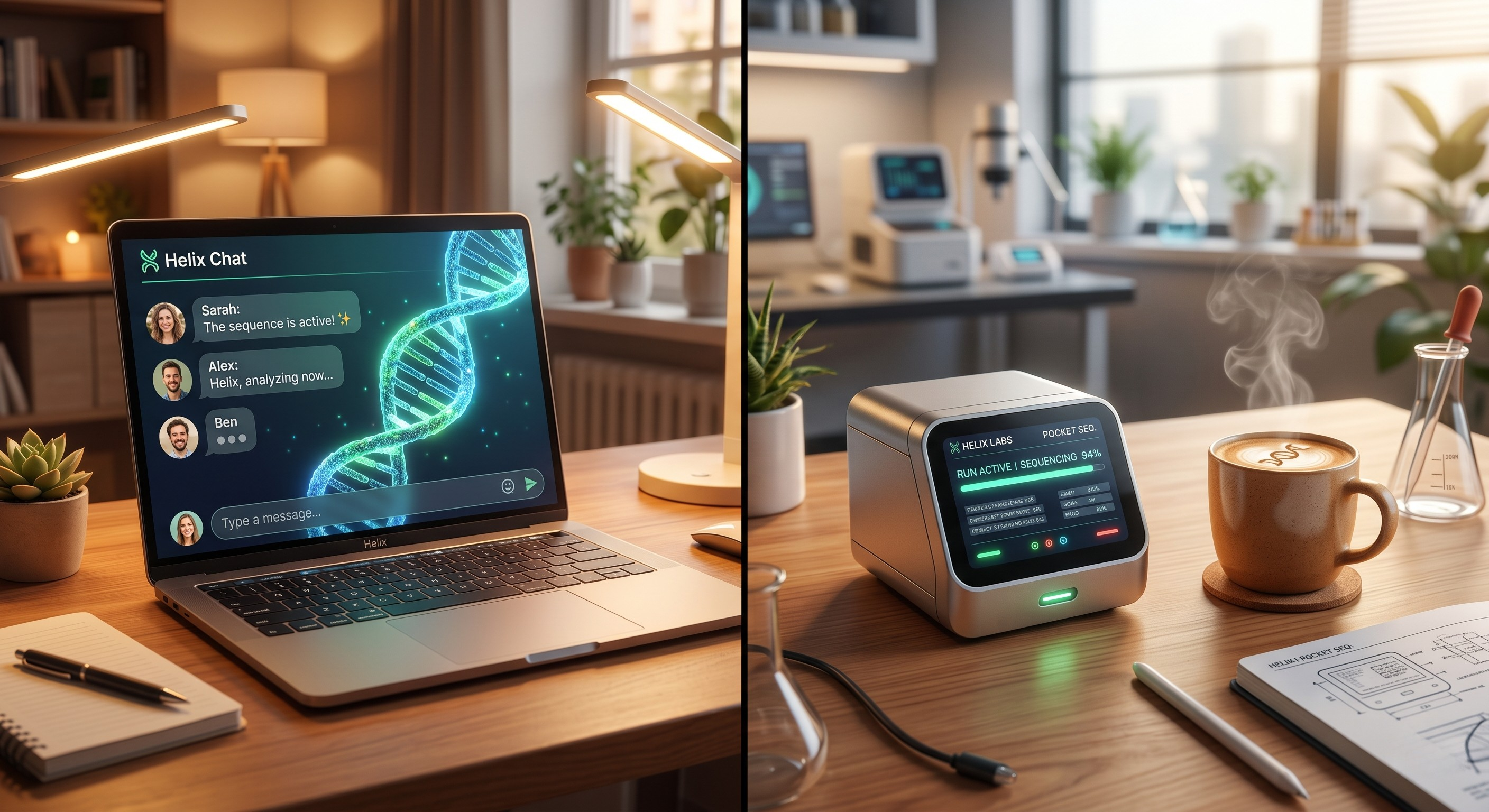
What this user did have was a portable DNA sequencer that cost approximately four lakhs (400,000 rupees), a laptop computer, and the help of an artificial intelligence conversation. In a matter of three days this user was able to determine that their DNA (the genome sequence) has a 99.8% level of precision compared to their actual DNA sample.
The Hardware Was Never Really That Challenging
Let’s first discuss the hardware. Over time, the typical drawn-out progress of technology through shrinking and depreciating. Millions of times larger computers that put people on the Moon are now available as pocket smartphones. The same can be said about DNA sequencing - the technology has been shrinking for some time.
Science has made it possible to produce portable DNA sequencers with sizes that could fit comfortably on a standard desk, costing around 400k rupees. While that isn’t above the budget of many people, it is an enormous decrease from the cost of earlier models that were several million dollars each. Consequently, the price of such machines was now well within the range of small clinics, university classrooms, or hobbyists with an interest in the subject matter.
The reality of this, however, is that having a physical DNA sequencer was never the hardest challenge. If a pristine and new espresso machine were simply dropped off at my house—well, then that would present me with my own expensive espresso machine (the hardware), but without having to buy an espresso machine (the software), I would never be able to use my new espresso machine.
The process of DNA sequencing is exponentially more intricate than that of an average lab experiment. The main challenge with DNA sequencing has always been the large breadth of extremely specific knowledge required to run the machines. First, you have to know which precise chemicals to use; secondly, you have to know the specific processes for preparing biological samples so they will not degrade; and lastly, once the machine produces gigabytes of data in the form of raw, seemingly random and chaotic data, you will need to understand how to convert this digitally raw noise into usable and acceptable forms of human genomic data.
Historically, this expertise was developed through years of discipline and focus on higher education. This particular Reddit user did not have this luxury of time.
AI Tutoring Life: The Infinite Personal Tutor!
Instead of enrolling in a college or hiring multiple biochemists, the user instead approached Claude (an exceptional advanced generative Natural Language Processing AI model) and asked for help as if they had an incredibly patient, unlimited knowledge private tutor.
Instead of asking Claude to "do it for me", they broke this monumental task into bite sized tasks (steps) by asking Claude many questions.
"What chemicals do I need to prepare a saliva specimen for this type of DNA reader?"
"What are the proper safety protocols for working with these reagents in my home?"
"I am receiving this particular error code from the machine while trying to calibrate, what does that mean?"
"How do I write a Python script to align this raw fastq output against the Standard Human Reference Genome?"
When faced with a roadblock, they consulted with the AI. Using the skills required to complete both a PhD in bioinformatics and wet-lab biochemistry, the AI provided a series of measurable, understandable amounts of work to be accomplished daily until successful completion of the project; provided guidance on how to perform sample prep, instructed them on how to sequence the sample, and wrote all necessary code to analyze the data for their own genome sequence.
As a result, in only three days, an average individual went from opening their shipping box to having the entire sequence of their genome saved to their own personal computer with a 99.8% accuracy rate.
Ultimate Privacy Flex: You Own Your Blueprint
Now, let us backtrack some and see what it means from a macro perspective, especially regarding countries such as India.
If you need a complete DNA test (to check genetic markers, hereditary diseases, and/or ancestry) in India, it can cost anywhere from Rs. 30,000 to Rs. 1.5 lakhs at a lab, where you will provide them with a sample of your DNA and wait weeks for the results.
In addition to the monetary cost, the data you provide them will be considered private.
If you use a sequencing lab that is commercial, they will keep a copy of your genetic data. Your DNA is unique and an identifier; it tells the story of your physical characteristics, your likelihood of developing certain diseases, and your genetic heritage. It is your most sensitive information regarding your DNA. While these types of companies have privacy policies, there are definitely breaches of data regularly in the digital world. As a result, your DNA is often used for research by pharmaceutical companies after they have anonymized your personal data.
This Redditor sidestepped the whole thing by sequencing their DNA locally on their own computer and accomplishing one of the rarest achievements in the 21st century: complete data ownership.
This user now has complete ownership of all of the A's, C's, T's and G's (the letters that make up the bases of each DNA sequence) of their own DNA. No one else has a copy of this individual's DNA: neither commercial laboratories, nor technology corporations, nor government databases. This data is purely theirs and safely kept on a hard drive in their possession. In today's world where our digital information is continuously harvested from us (i.e., Facebook), regaining control over our biological information is an unprecedented paradigm shift.
Citizen Scientist Revolution
Artificial Intelligence (AI) is changing the way we span traditional forms of communication with emails and creating marketing copy or simple web pages; however, this story indicates that AI will also affect Sciences as we know them now; instead of being reserved only by highly trained individuals with access to Grant money for a fully funded lab, College labs, or long waiting times to enter approved Research Programs , Scientists in this future will have access to technology (AI) they can use to further understand their area of study through collaborative efforts online (laptops and conversations), without being limited by those institutions previously mentioned.
The above advancement opens up a new way to use the term "Citizen Scientist," which makes sense when you factor in the following visions: Local farmers will have affordable sequencing technology and AI to monitor diseases in crops at any point in time, as opposed to waiting for the results of tests performed in a county or state Agricultural Technical Research facility. Non-profit environmental organizations will have the same capability as described above for monitoring local water sources for specific bacterial DNA.
When access to scientific research becomes so much easier than it previously was, we have a society where Innovative ideas and creations will be developed with record pace. We move to a place where experts will no longer represent "Science" as something and have replaced this definition with Science being something we can all create, invent, or develop for ourselves!