.svg)
.svg)
 For Instructor
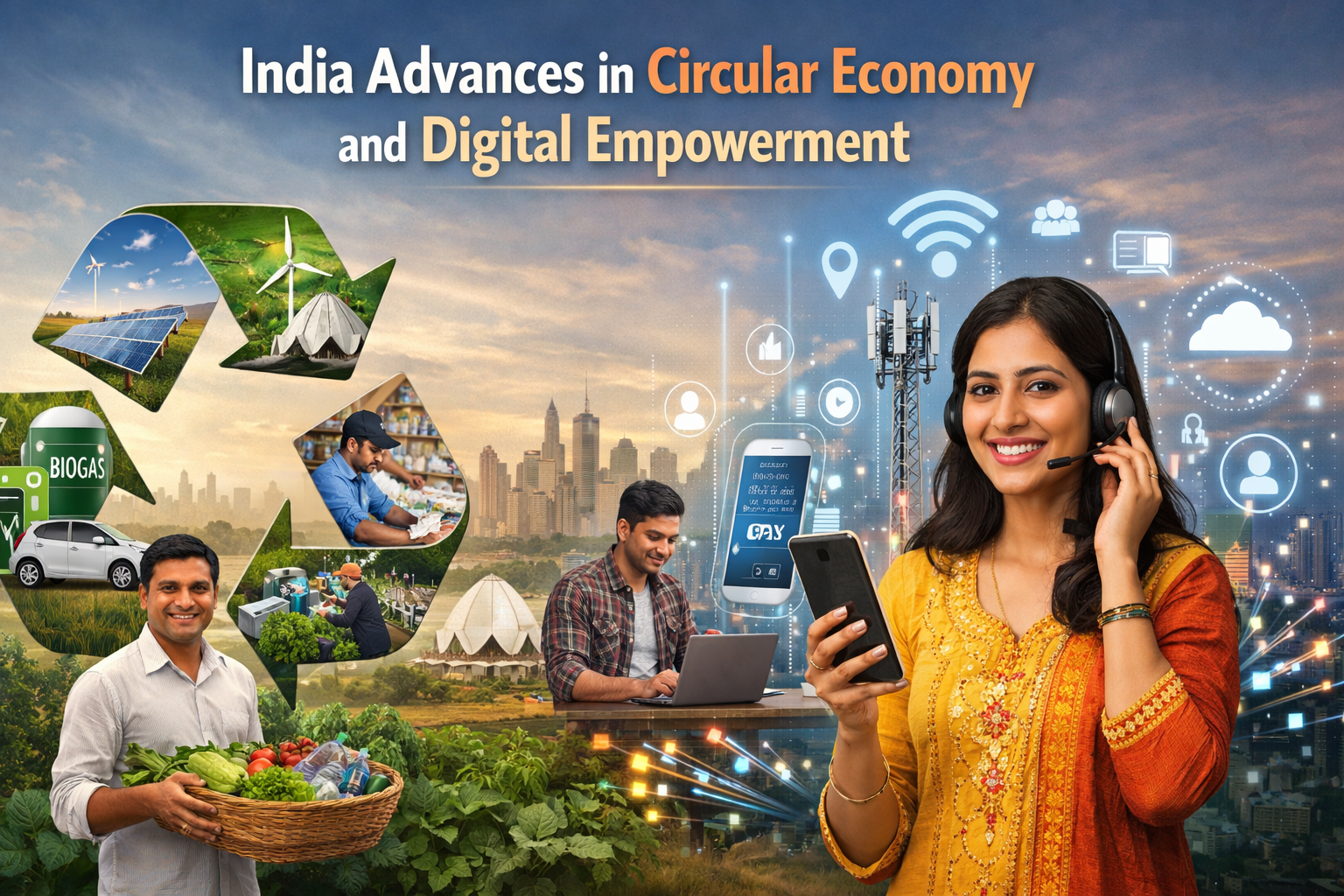
India Moving Toward a Sustainable Future with Circular Economy and Digital Empowerment
Hello everyone! India's not just saying they're going to be sustainable and skilled; they've started doing it! NITI Aayog (the think tank for government policy) just released three studies on developing a circular economy for vehicles, tires, electric waste (e-waste), and batteries. In addition to that, they also announced a partnership to help develop digital literacy, financial inclusion and skills training in India’s rural communities. Unlike other countries where government officials simply discuss big problems, these reports provide a strategy for reducing waste from the auto industry, increasing access to e-waste recycling, and helping those who are underserved gain the skills they need to find meaningful employment. Let's look at the details of this progress toward sustainability and how it benefits both our planet and people.
What’s a Circular Economy?
To put it as simply as possible, a circular economy is the opposite of a linear (make-use-dispose; which fills landfills) economy. A circular economy allows reuse, recycling or refurbishing products. The automobile industry creates a lot of waste; for example, the disposal of used tires, and all of the batteries from electric vehicles that no longer work. NITI’s reports detail how to implement a circular economy in India’s automobile sector, thus creating jobs, improving environmental quality and reducing pollution.
The Vehicle’s Report: Outlines how to responsibly dismantle an automobile at the end of its life. The goal is to recycle 100% of metal, plastic and fluid from a vehicle by 2030. Just imagine, you could take your old Maruti car and repurpose it into a new