.svg)
.svg)
 For Instructor
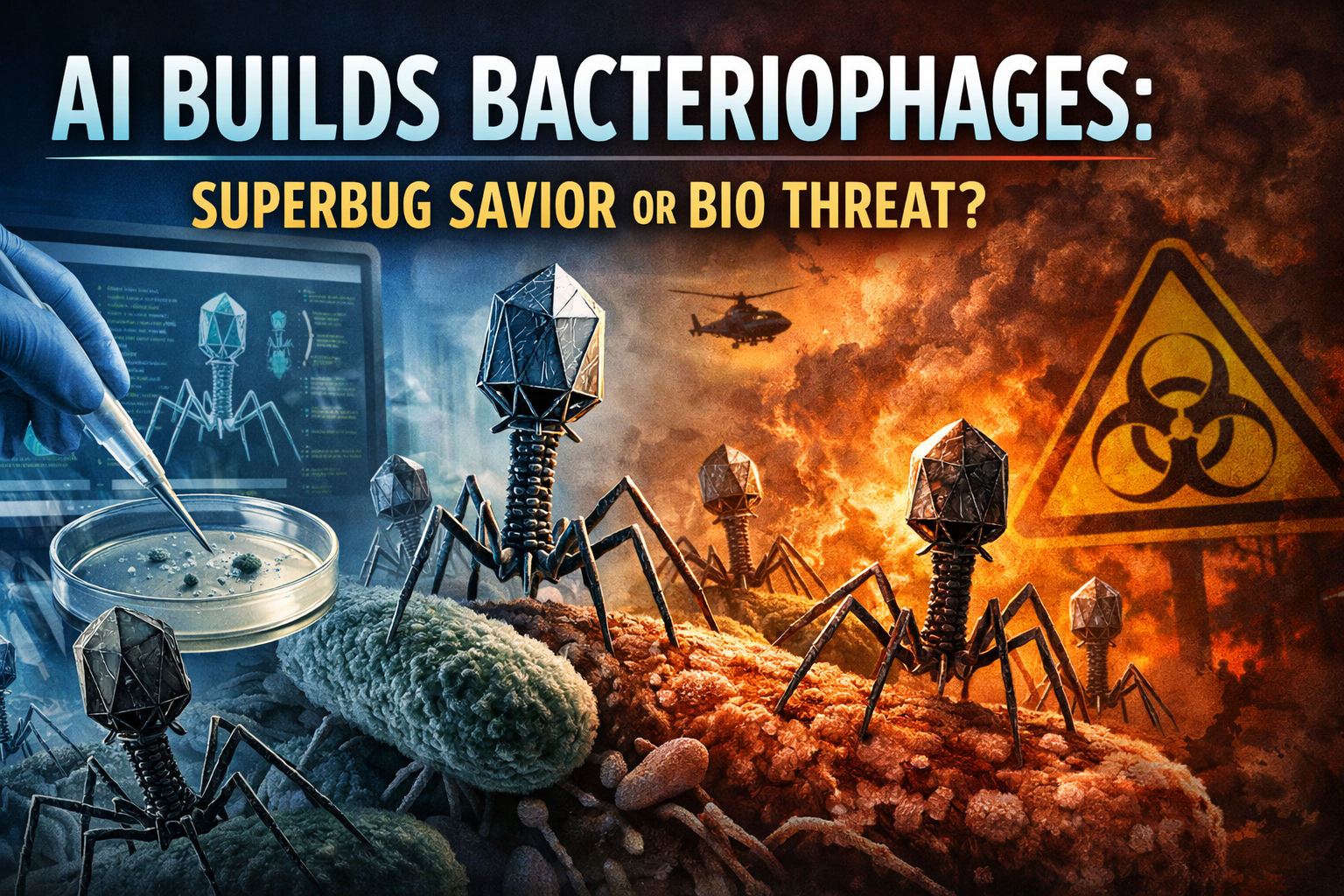
Scientists are creating laboratory-generated viruses (bacteriophages) to eliminate antibiotic-resistant bacteria using Artificial Intelligence.
Bacteriophages (phages) are viruses that attack and kill bacteria. Phages infect bacterial cells, take over the bacterial cell machineries to produce copies of themselves, and finally burst open the host bacteria. Unlike antibiotics, bacteriophages are safe for human cells. Due to the rapid increase in antibiotic resistance and the toll this is taking on human health and welfare, scientists believe that AI will help researchers combat the rise of multi-drug resistant organisms (superbugs) by creating "tailor-made" bacteriophages for specific bacterial infections.
To create "custom-made" bacteriophages using AI, microbiologists feed the AI-generated models the DNA of the target bacteria. The AI utilizes this information to create optimized phage genomes. Several research teams have already successfully developed 16 different synthetic viruses in the laboratory that have been proven effective against the bacteria in patients. All of these have been effective against very specific infections.
How does it work? In order to create a synthetic virus with the help of AI, researchers first identify and analyze all the DNA sequences in the genomes of the various bacteriophages that exist. The AI uses this information to predict the three-dimensional shape and folding of the proteins encoded in the DNA sequences of all the different bacteriophages.
The benefit of using AI to design bacteriophages is that laboratories can create phage viruses through the use of "simulated evolution" rather than by using the traditional method of trial-and-error. Last year, a research team at Rice University demonstrated how they have built the foundation for creating synthetic bacteriophages by building genetic circuits using AI technology. Other research groups have already developed synthetic bacteriophages capable of killing 4 superbugs in a matter of hours.
The potential applications of these synthetic viruses are enormous. They include precision-based antibiotics, bacteriophage cocktails for previously untreatable infections, and even targeted cancer treatments via the use of bacteriophages.
However, many scientists are also concerned that the use of AI to create synthetic phages raises serious biosecurity issues. By providing researchers with access to AI, there is a greater ability for biosecurity threats to be developed.