.svg)
.svg)
 For Instructor
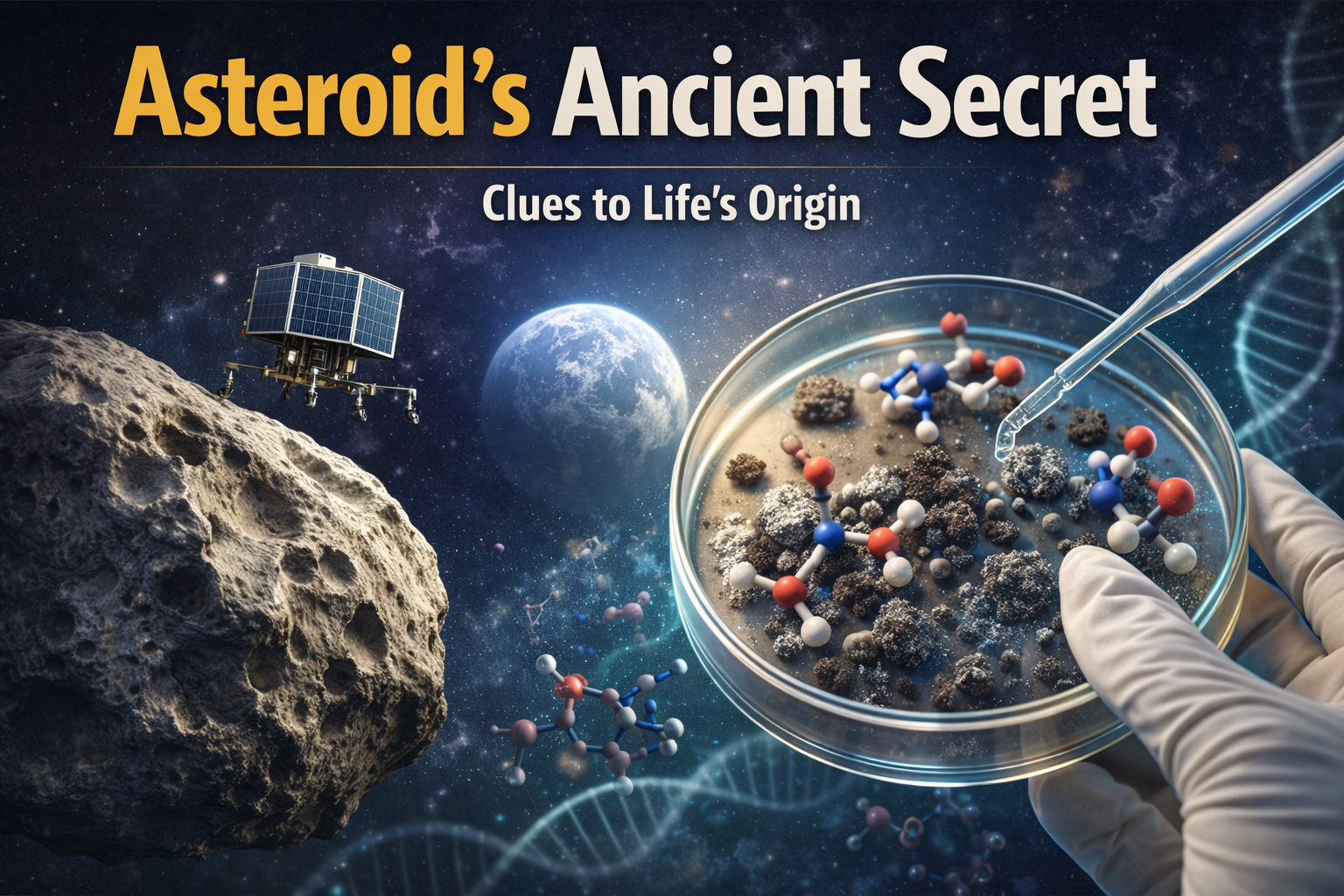
Earth's Beginning: Evidence of Life on Earth from Asteroids
It’s just been announced that scientists have uncovered some ancient (a billion years) asteroids that may provide evidence of the origin of life on Earth. It is believed that the molecules necessary for building our first living organisms, RNA, may be able to form through natural processes on Earth or be delivered here via the asteroids.
All Together Now—The First RNAs Made on Earth?
RNA is similar to DNA but far simpler than DNA in terms of its structure. RNA carries information for producing proteins (and, according to many scientists, was likely the predominant structural and functional molecule in early life). Even though scientists believed it would be very difficult to replicate RNA on early Earth, they have now been able to produce RNAs using simulated early Earth environments, with the assistance of many of the same compounds thought to have been present in ancient seawater, such as borates.
The New Compounds & Their Role in RNA Formation
The scientists used a variety of conditions, including heat (90 C), and dry/wet cycles, to produce RNAs from simulated early Earth environments.
The researchers found that, contrary to previous ideas, borate does not inhibit ribose formation, but rather stabilizes the labile products of the ribose synthesis reaction.
The Compounds Already Found On Planets
NASA’s OSIRIS-REx mission has returned with samples of the asteroid Bennu (which formed about 4.3 billion years ago). In addition to mineral and organic compounds that are similar to those found in hairy asteroids, researchers are also finding ribose sugar (one of the necessary building blocks for RNA) within the Bennu sample.
Geologists think that a large protoplanet collided with the early Earth approximately 4.3 billion years ago and released many of the compounds necessary to create the building blocks of early life.