.svg)
.svg)
 For Instructor
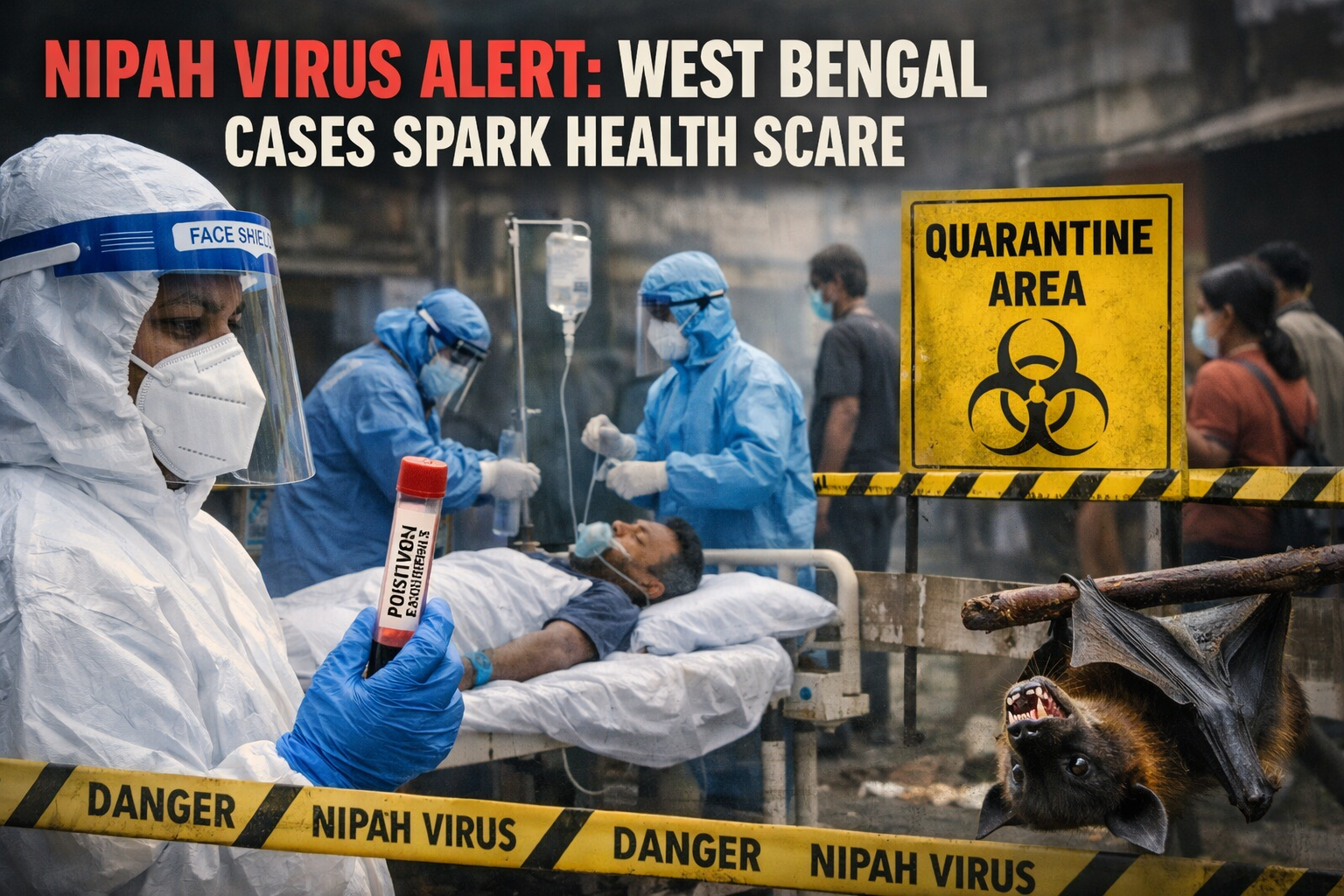
Hi there – the news from West Bengal is tragic. Two nurses are in the fight of their lives against Nipah virus – one is in a coma and the other is critically ill, with severe fever and respiratory issues. These cases were confirmed by the National Institute of Virology (NIV) in Pune, India, and more than 90 additional people who had direct exposure to the nurses are being closely monitored. Nipah Virus has re-emerged, and we need to have a conversation about this.
Let's look at what is Nipah Virus.
Nipah Virus is a zoonotic disease, which means it comes from animals and can be passed onto humans. Fruit Bats are considered the natural hosts (they can carry the virus and do not become sick), while Pigs can also be infected by Nipah Virus and spread the virus through respiratory secretions and contact. According to the World Health Organization (WHO), the fatality rate of Nipah Virus is as high as 75% among humans after they become infected. Unfortunately, there are no vaccines or specific medicines available to treat Nipah Virus. Prevention is the only cure.
How did this occur in West Bengal?
It is likely that the two nurses were infected by coming into contact with animals (e.g. bats) that were infected with Nipah Virus or by consuming bat-contaminated foods. Nipah Virus mainly affects humans through the respiratory system (e.g. coughing, respiratory failure) and through the central nervous system (e.g. encephalitis, seizures, coma). The early symptoms of Nipah Virus infection are quite mild (e.g. fever, headaches), but the disease generally progresses rapidly within a few days.
Let's break down how Nipah Virus is transmitted (please don't skip this):
Animal-to-Human Transmission: The virus can be transmitted from bats to humans through the consumption of fruit juice, raw Date Palm sap and/or fruits that have been contaminated by bats. Pigs can transmit the virus through respiratory droplets.
Human-to-Human Transmission: Close physical contact between infected and uninfected individuals is thought to be a likely mode of transmission.
Dos and Don'ts to stay safe:
- DO: Cook pork thoroughly. Wear protective gear near animals. Wash hands obsessively.
- DON'T: Drink raw date palm sap. Eat half-bitten fruits. Touch sick animals bare-handed.
Nipah's rare but ruthless. Kerala outbreaks taught us that. If you're in West Bengal or handled bats/pigs, watch for fever and see a doctor ASAP. Share this—awareness saves lives!