.svg)
.svg)
 For Instructor
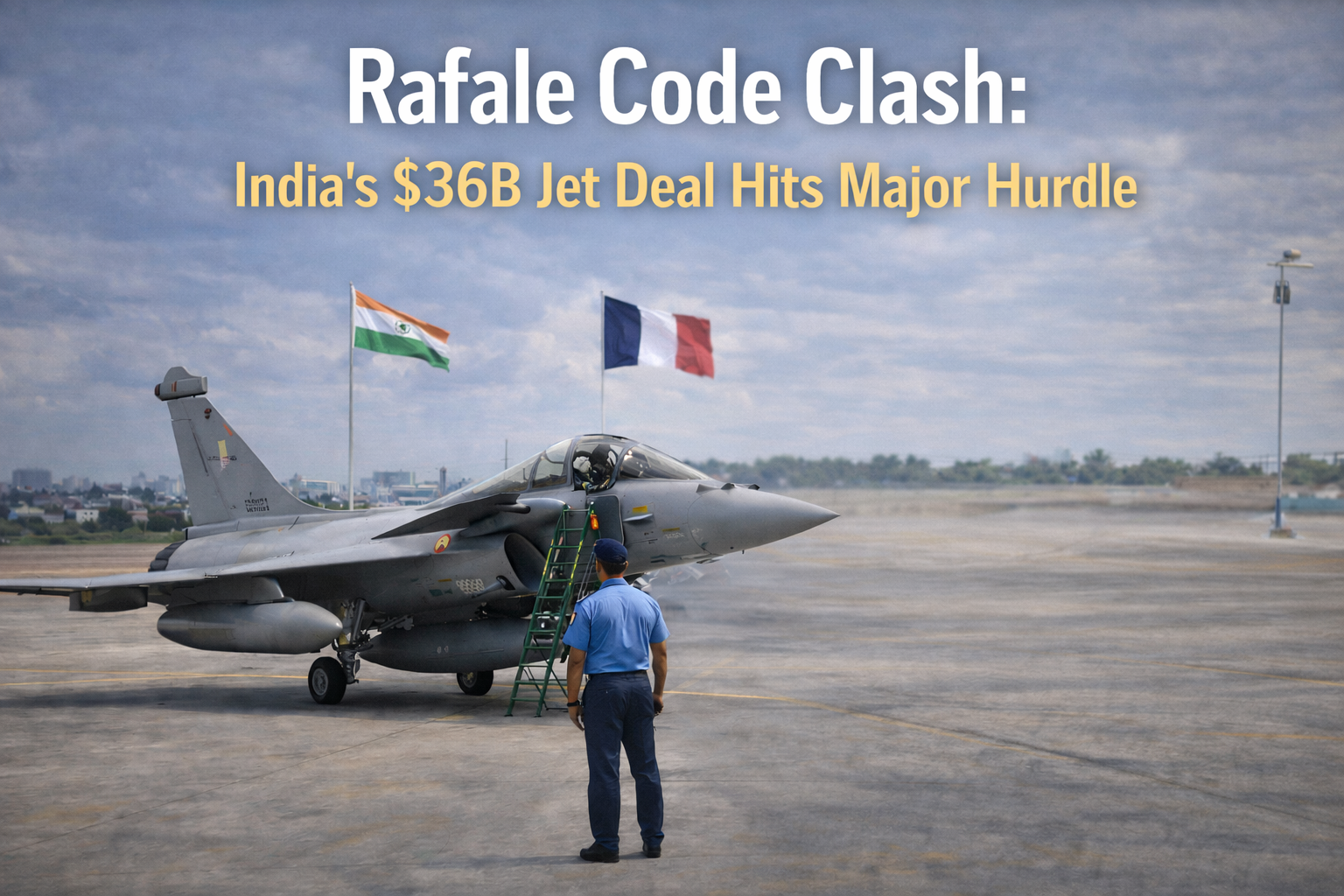
India's proposed acquisition of 114 additional Rafale fighter aircraft at a cost of USD 36 billion has encountered significant challenges due to France's refusal to provide India with critical Sourced Codes. The ongoing problem between India and France has led to a significant public discourse on what Military Self-Reliance means for India.
Sourced Codes are important to India because they provide the programmatic control of the Rafale's Radar Fusion, Aviation Electronic Warfare, Ammunition Integration, and Mission Systems, and without access to Sourced Codes, India cannot independently integrate its own sovereign missiles (E.g., Astra, Rudram missiles and, in the future, BrahMos-NG) onto Rafale Aircraft. As a result, any upgrades or changes made to the Rafale aircraft that require access to Sourced Codes will be subject to the approval of France and could be delayed due to conflict with either China or Pakistan resulting in further costs.
France places an extremely high level of investment in the development of the RBE2 AESA Radar and SPECTRA EW Suite, and by not providing Sourced Codes to its customers, France is attempting to protect its R&D investment from being leaked to rival nations, like China. Furthermore, if France were to sell weapons like the Meteor to its rivals, it would do so with a decreased advantage over its competitors because of the potential for the opposing nation to have access to French technology.
The initial proposal for the additional 114 Rafale fighter jets consists of an overall total of 3,25,000 crores (US$ 36.1 billion) worth of 12-18 Fly Away deliveries to meet immediate requirements to support the IAF, with the remaining aircraft to be assembled in India by HAL. When the proposal was submitted to the Government of India, it peripherally stated that the indigenous content would begin at 30%.