.svg)
.svg)
 For Instructor
Have you ever downloaded a brand-new app, opened it exactly once, and then completely forgot it existed until your phone warned you that your storage was almost full? If so, you are definitely not alone.
App fatigue is a very real phenomenon. We are tired of learning new user interfaces, managing new push notifications, and creating endless new passwords. We don't want more software cluttering up our digital lives; we just want our existing tools to work better.
A partner at the venture capital firm Andreessen Horowitz (a16z) recently published a market map that perfectly captures where the artificial intelligence industry is heading. When I saw it, it completely shifted how I think about our daily interactions with AI. The big takeaway? The next major platform for AI isn't a slick new app, a standalone website, or a piece of wearable hardware.
It is an app that is already sitting on the dock of your iPhone right now: iMessage.
The End of the "Open an App" Era
It makes perfect sense when you stop to think about it. You don't want to open a dedicated application every time you need help drafting a quick email, organizing your family's busy schedule, or checking in on your daily habits. It adds friction to the process.
Instead, you want an assistant that feels as accessible, natural, and immediate as texting a friend.
According to the new a16z market map, there are already nine-plus prominent companies building AI systems that live entirely inside iMessage. These aren't the clunky, frustrating customer service chatbots from five years ago. They are highly capable, specialized AI assistants with distinct personalities and use cases.
Here is a quick look at some of the fascinating AI contacts you can already text:
- Poke: (Often miscaptioned as "Both" in viral videos!) The absolute trailblazer of the group. We’ll get to their massive breakthrough with Apple in a moment, but they are a general AI agent designed to help everyday users manage tasks effortlessly.
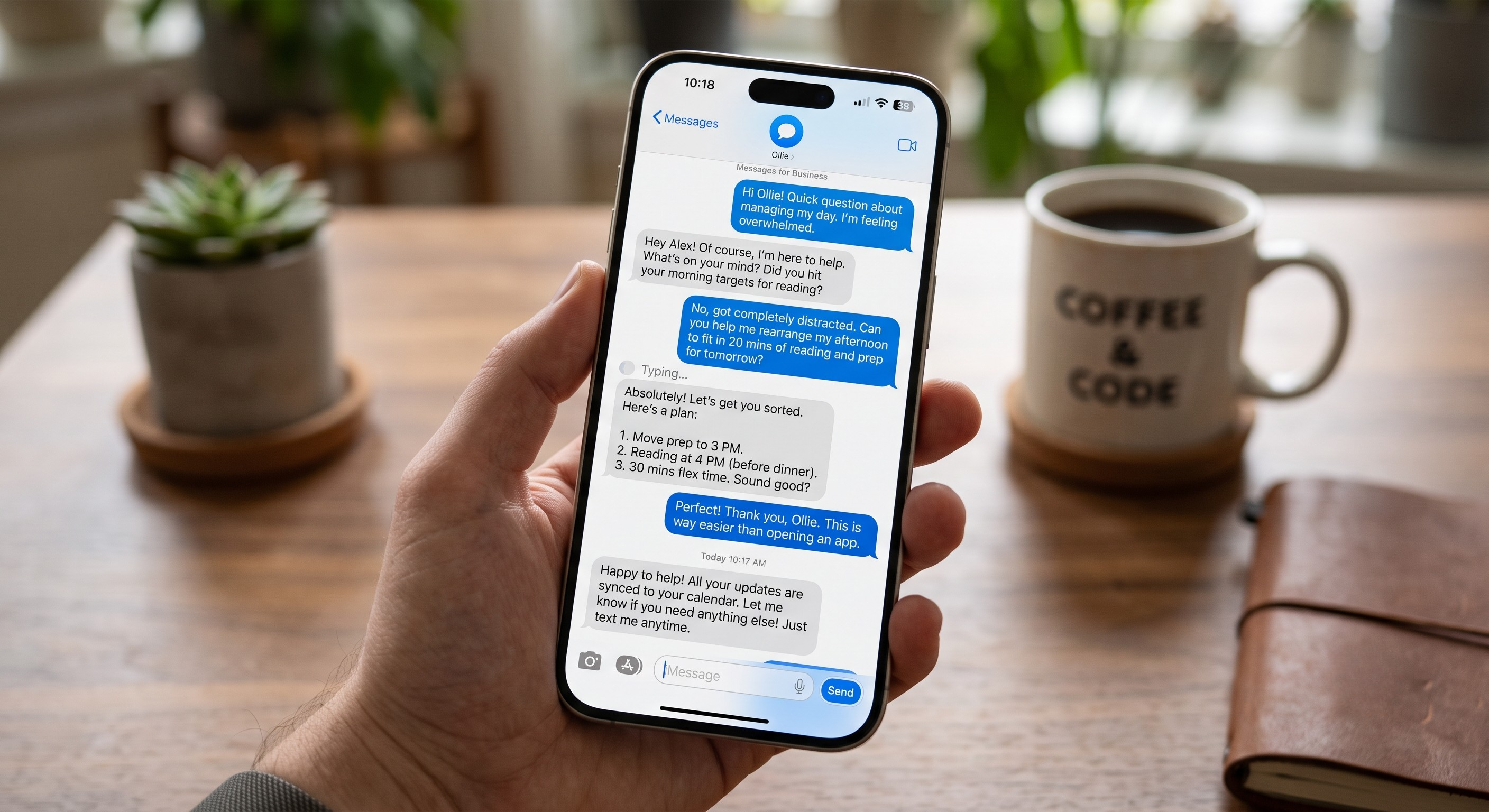
- Ollie: Think of Ollie as the ultimate family manager. It carries the heavy mental load of school schedules, family calendars, and domestic coordination.
- Lucas: Need some accountability? Lucas is the proactive friend who texts you first to check in on your habits and make sure you are hitting your goals.
- Orchid: Your high-level executive assistant. It drafts replies, books meetings, and crucially, asks for your sign-off before sending anything out on your behalf.
- Zo: A literal cloud computer that you can text. It comes with its own Linux server, bridging the gap between casual texting and heavy-duty computing.
- Lindy: A powerful work and personal assistant that operates right in your text threads, helping you manage your professional life without ever leaving your messages.
Why iMessage? The Power of the Blue Bubble
You might be wondering: with so many messaging apps out there, why are all these brilliant developers laser-focused on iMessage specifically? It comes down to three massive advantages that Apple has baked into its ecosystem:
1. The Spam Filter Effect
We all ignore SMS messages from unknown numbers. Standard text messages have become a wasteland of political fundraising, scam deliveries, and spam marketing. iMessage, however, feels incredibly personal and curated. If an AI reaches you there, it bypasses the spam fatigue.
2. Native Features That Feel Human
iMessage offers a rich, dynamic chatting experience. When you text an AI agent in iMessage, you get the little animated typing indicators (the "..." bubble), reliable read receipts, and beautiful rich link previews. These small details make interacting with an AI feel incredibly conversational, mirroring the exact way we talk to human beings.
3. The Psychology of the Blue Bubble
Let’s be honest: the blue bubble means trust. It implies you are inside the secure Apple ecosystem. A green SMS bubble, on the other hand, often feels like an automated marketing blast from a dentist's office. By existing as a blue bubble, these AI agents instantly gain a level of psychological trust and intimacy with the user.
Hacking the Walled Garden
Building AI for iMessage has historically been a nightmare for developers. Apple is notoriously protective of its ecosystem and has never offered a public API (Application Programming Interface) that lets developers easily build iMessage bots.
So, how did these startups do it? Through sheer, brute-force engineering.
To make their AI agents text you from a blue bubble, companies literally had to rent fleets of real, physical iPhones or Mac mini computers, assigning real phone numbers to them. They built complex server farms of Apple hardware just to bridge the gap between their AI software and your iPhone. It was an incredibly expensive, hacky, and unscalable workaround, but they did it because the demand for frictionless AI was that high.
The Watershed Moment: Apple Opens the Gates
All of that changed last week. After years of startups relying on Mac server farms, Apple finally made a move that legitimized the entire space.
Apple officially onboarded Poke (again, the agent you may have heard referred to as "Both") directly onto their platform. With that single move, Poke became the very first third-party AI agent approved on Apple Messages for Business.
This is a monumental shift. Apple Messages for Business is the official, secure framework that allows massive companies like airlines and banks to communicate with users natively in iMessage. By allowing a standalone AI agent into this exclusive club, Apple has signaled that they recognize the future of AI isn't just in separate apps—it's in our chat threads.
Poke no longer has to rely on a hacky farm of iPhones. They are officially sanctioned, operating securely and efficiently within Apple's ecosystem (and paying Apple a per-user fee to do so).