.svg)
.svg)
 For Instructor
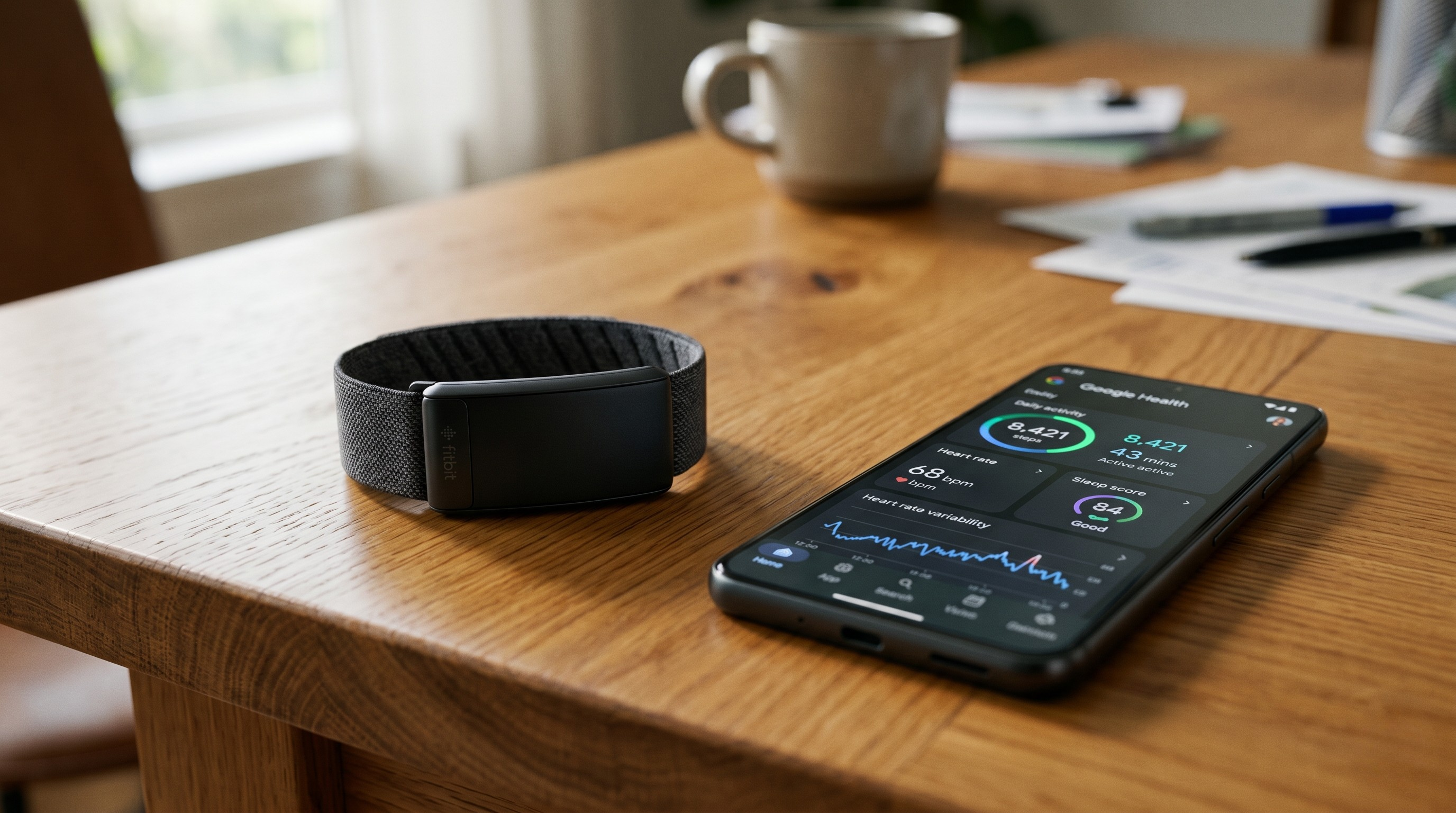
For many years now, there has been a tremendous focus in the market for fitness trackers on having a display on the device. Bands have mimicked smartwatches, smartwatches have attempted to mimic medical devices, and individuals have had to deal with bands that constantly buzz with notifications and provide a glowing rectangular face are all examples of how the wearable industry has evolved to include so many different types of technology. However, over the past few years, a counter movement to the screen-based wearable has quietly gained steam throughout the fitness community. Actually, Whoop may arguably be the creator of the data-driven wearable without a screen.
This isn't going to be the case much longer as there's an incredible announcement coming from Google that is going to change the history of the wearable industry for eternity. The Fitbit Air is a Whoop-style band without a screen that tracks all your vitals, recovery, and sleep 24/7. It has an impressive battery life of up to a week, and it retails for only $100! Instead of just launching a new gadget, Google is using their launch of the Fitbit Air to redefine their position within the high-performance health tracker marketplace.
So what is it about the Fitbit Air that is going to make it a success? Should the subscription model be considered? Should you finally get rid of the screen on your wrist? We will provide everything you need to know regarding Google's latest product introduction.
The attractiveness of screenless trackers
Prior to discussing the technical aspects of the Fitbit Air, we must first consider the underlying philosophy of the device. What is the purpose of having no screen on a fitness tracker? For many users, their devices can be an overwhelming distraction. As an example, when using a traditional smartwatch, not only do you have a way of monitoring your health, but also you are using it as a source of notifications. You may look down to check your heart rate during exercise, but find yourself reading an urgent email from your boss or a text message from your friend. The burden of being "connected" 24/7 will take away from the benefits of exercise, both physically and mentally.
In contrast to wearable technology that has a screen or interface, a non-screen wearables, like the Fitbit Air, provide a seamless experience. You wear the device on your wrist and it will collect thousands of data points about your body including heart rate variability, skin temperature, blood oxygen levels, and movement without ever giving you a notification that someone liked your post on social media. As such, you are able to completely remove yourself from what is going on with your social network and focus all of your attention on what you are doing in the present moment - whether that be lifting weights, reading a book, or getting to sleep at night. The design of the Fitbit Air is inherently intended to be invisible. Lightweight, extremely low-profile, and comfortable enough to wear around the clock.
Ultimate Battery Life & Hardware
With there being no OLED display consuming battery life – each time your arm moves – a full week of use (24/7) on a single charge from the Fitbit Air is insane!
In order for sleep to be measured accurately as a sleep tracker, you have to wear the device while you sleep. So I do not see how a traditional smartwatch can function as a sleep tracker when you have to put it on a charger every night! I would wear the Fitbit Air, and as a result, I would have the ability to charge it while I shower on Sunday mornings, then not charge it until next Sunday!
The $100 price for a Fitbit Air is the most aggressive part of Google's strategy. When you compare products like Whoop as an example, their products, or hardware, are typically free; however in order to receive a Whoop product, you must pay them a high monthly (or annual) cost which can be in the hundreds of dollars for each year! Google has changed the game by putting premium quality hardware into your hands for low-cost ($100) upfront making it very easy to buy for any consumer whether you are an everyday person or an athlete!
The Revival of Fitbit with Google Health
Software is just as important as hardware; a fitness tracker will really only shine when both software and hardware are working in concert with each other. Google has officially started launching its new health ecosystem with the introduction of the Fitbit Air. The app, which will be used to monitor your data, won't be the traditional Fitbit app we're all used to seeing; rather, it will be a revamped app under the banner of the new Google Health app.
This is a great decision because the way this company has grouped together all the services related to health and wellness into one Google Health branded app will form an easily connectable central place within Android and integrate much more fully with Google Fit data along with the entire Google ecosystem.
The free tier of the Google Health app, out of the box, provides everything you need for free (with no purchase whatsoever). So if you purchase a Fitbit Air for $100, you will receive automatic lifetime access to basic activity tracking, daily step counts, live heart rate monitoring and the standard stages of sleep. For a person who is just trying to meet their 10,000 steps and get enough good sleep, this free tier provides everything needed.
1. Meal Logging Using Photos
For those who have attempted to track macros or calories, they will tell you that logging your food is one of the hardest things to do. Usually, you have to search for what you are eating in a database, weigh out your portions, and manually log the food in a logging app. This can be a tedious and often inaccurate experience. The Gemini-based feature for logging meals is a total game-changer.
To log meals, you simply go to the Google Health app, snap a picture of the food you have on your plate/at your table, and the AI will do the rest. The Gemini uses sophisticated computer vision to identify the food you’ve taken a picture of and how big of a portion you have. Then, it will automatically figure out how many calories and macronutrients (protein, fat, carbs) are in that food. An example would be if you took a picture of grilled chicken salad with avocado; it would instantly log the food you ate. This removes the friction associated with counting calories, so this is a method that you can follow long term.
2. Adaptive Fitness Plans
Most fitness apps provide fixed routines (e.g., running for three miles on Mondays; lifting weights on Tuesdays, etc.), yet our bodies can be unpredictable. Lack of sleep can make it challenging to stick with little nighttime activity; even if some days are fine for individuals, if their sleep band detects an issue, the physical activity was done that day may not help them positively (i.e., an individual may work out too hard even though they're still fatigued).
With the Gemini AI technology, you will receive a real-time analysis of how your body feels at all times through Continuous Person Data collected from all past activity. When band data indicates you're not adequately recovered from prior night(s)' sleep, your AI Coach could suggest replacing planned high intensity interval workout with gentler yoga flow (30 minutes instead of high intensity interval); on other hand, if all metrics indicate you're completely rested, you could receive encouragement the same way but with new workout demand (i.e., increase volume/intensity for timed minutes/days). This is equal to having your own Personal Trainer that understands your entire body down to cellular level two.
3. Sleep Insight and Environment Correlation
You know 8 hours of sleep, but is the quality of your sleep also as valued as quantity? The premium Gemini features give you very intricate insights into your sleep architecture as a whole. So rather than just telling you that you've awakened 3 times, it will alert you to a reason based on your recorded patterns of Insomnia and sleep-interrupting variables throughout weeks and months through Artificial Intelligence.
For example, if the AI had been monitoring your nightly activity logs, it could generate the following alert that may be used as actionable and specific: “On the nights you logged your last meal (high in sugar) after 8 PM, your deep sleep decreased by 20%, perhaps you should move your final meal earlier?” This type of actionable and very specific insight is what makes the monthly subscription fee justifiable.
Analyzing Fitbit Air Pricing Strategy and Google Ecosystem
Join me as I delve into the Fitbit Air's economics - literally brilliant economics. The hardware costs $100 and there are 3 tiers of AI features ($10/month) available through the Fitbit App.
To sweeten the deal, Google is composing 2 huge incentives:
1. The Fitbit Air will launch on May 26th, and you will receive 3 months of premium AI services completely FREE!! This gives you 90 days of exposure to using a Gemini AI Coach, photo logging your meals, and watching as the fitness plans automatically adapt. All of this, without any money out of pocket until the end of the 90-day trial period!!
2. If you already subscribe to either a Google AI Pro or Ultra subscription, all of Fitbit Premium will automatically unlock on your Google Health app. No additional charges. You may purchase the $100 Fitbit Air, link the band to your existing Google Account and enjoy all of the supplemental fitness services available through the premium package.
The synergy between Google Ecosystems and Fitbit Air make them both virtually a no-brainer for tech-savvy users already leveraging Google AIs.
The Verdict: Fitbit Air vs. Whoop
Given Whoop's strong connection to the creation of this product category and their development of a strong community of athletes and exercise enthusiasts, comparing it to their product will be unavoidable. The only drawback with them is their pricing structure: $30 per month or a few hundred dollars up front for access to the platform is prohibitive for many. If you stop paying for your Whoop strap, it does not become a piece of junk; it simply cannot provide value without access to the platform.
Fitbit Air from Google has the potential to be a significant disruptor. For example, if you were to purchase a Fitbit Air and after 6 months decided you no longer wished to pay $10 per month for the Gemini AI functionality, you would not have a paperweight but rather a fully functioning health tracker with a battery life of about 1 week that records your sleep, step count and heart rate for free on the Google Health app.
In addition, Google's size and expertise with artificial intelligence—especially the Gemini language models and computer vision technology—provide them with software capabilities that are simply unrivaled by smaller fitness companies, such as the photo-based meal logging that should attract users from other platforms.