.svg)
.svg)
 For Instructor
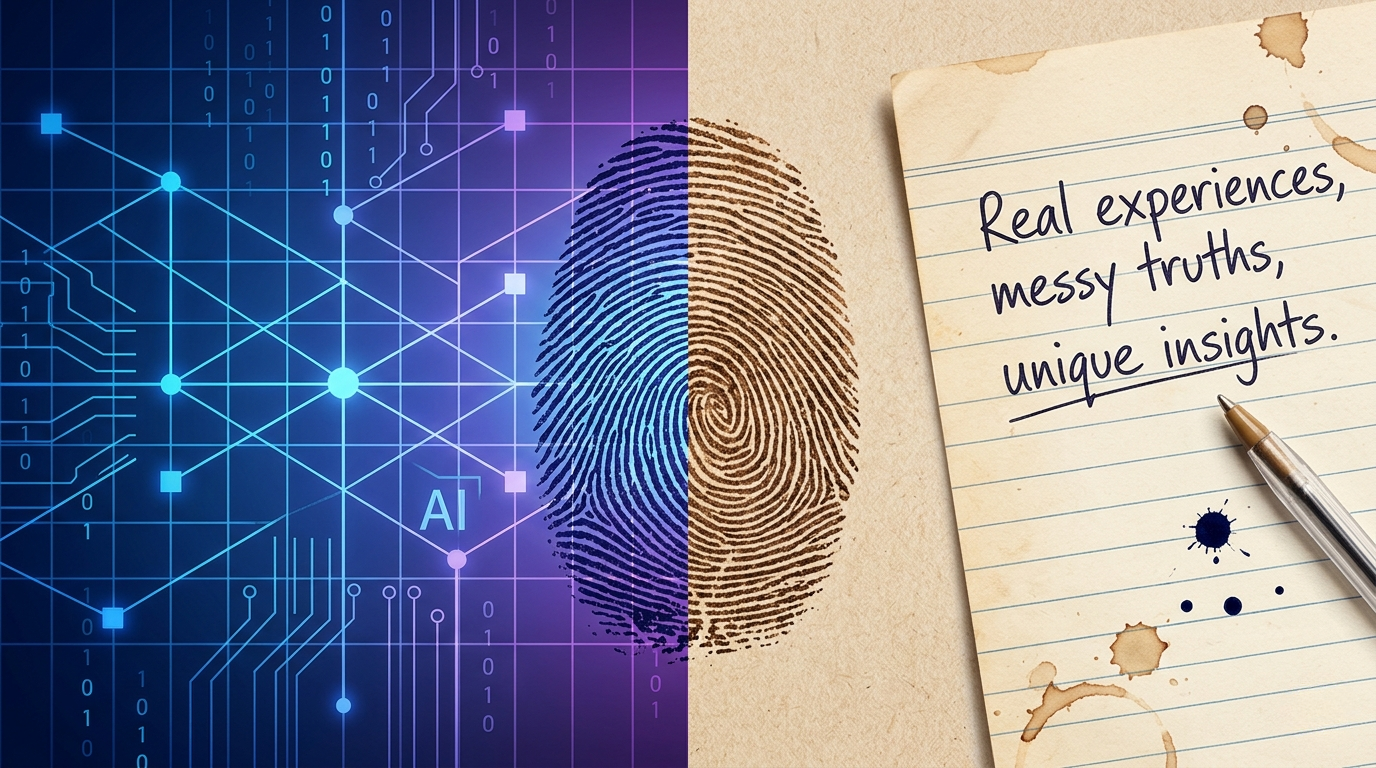
AI was once considered a novelty; it was thrilling and fascinating to see machines write both blockchain poetry and simple how-to instructions. However, that novelty was short-lived as another issue became apparent; namely, the 'ocean of average'. AI is built off data; therefore, when an AI model has been trained on that data, it assumes all of those records were equally valid (i.e., most of the time, the next word will be a word in the middle of the range). When AI produces the 'next most' probable word, that will create the 'next most' probable (and often the most boring) set of ideas.
Consumers are now weary and looking for something that doesn't feel like it came from a cold, lifeless piece of machinery. They want experience; they want the messiness of true story-telling and true creativity that no large language model has run through a million times before.
The Power Of Being Yourself
If you create your content with the same tools as everyone else, how do you make it different? You do what machines cannot do; you add a "human touch", or 'texture', to your content that builds relationships.
1. Real-World Experience - "I Was There" Factor
AI does not have experience sitting in the boardroom during a merger failure or working on a product for three years through that same product's real-world testing phase. AI cannot empathize with customers who experienced an extreme level of frustration with a poor customer service experience. When you provide those real-life instances with detail and messiness, you are proving you are credible; people trust expertise and not algorithms.
2. Having a Definite Perspective
Artificial Intelligence is typically neutral and designed to assist, so it won’t usually take sides since it’s trained to look at everything from multiple perspectives. This is reliable for a research assistant, but not very useful when building a brand because you want your brand to mean something definitively. Don’t shy away from being bold, disagreeing with what everyone else in the industry is saying, or giving someone a provocative opinion.
3. Micro-Imperfect/Unfinished Product (LoFi) Video
One reason that raw-finished, low-quality videos get more views and engagement on social media than traditional produced commercials is because they look authentic. By 2026, an informal, conversational tone will outperform 100n formal polished, written AI-generated documents.
Balancing AI and People: How Do We Make This Work?
We're not trying to eliminate AI use; we're trying to remove AI as the creator. AI should assist us by being the architect, not the creator.
Research: Use AI to gather data and summarize reports to prepare your content.
This way, you will have the best assistant out there.
Writing the Draft: You will write the main story using your own voice, slang, or analogies.
Using a Human Filter: Before anything goes live, ask, "Could AI have written this"? If the answer is yes, you must have not incorporated enough of your personality (i.e., human touch) to make it uniquely yours.
Changing Towards 2026: The Pendulum Swings Back
As we witness the movement of the pendulum away from "Volume-Based Marketing" towards "Trust-Based Marketing," we can expect to see companies taking advantage of AI technologies to perform dull and time-consuming operational tasks while freeing up people (increasing the human element) to create trust and develop genuine relationships through deeper research into clients and communities as well as enhance their ability to create
a narrative through traditional forms such as newspapers, television and radio, or new forms such as social media. The concept of authenticity is no longer simply a
term or catchphrase but one of the tools/strategies organisations/clusters use in order to grow their market share. By giving audiences authentic material, organisations/clusters provide their audience with something that will differentiate them from a robot in their choice of which
organisation/cluster they select and, therefore, increase their market share as a result of the resulting trust generated by that audience.