.svg)
.svg)
 For Instructor
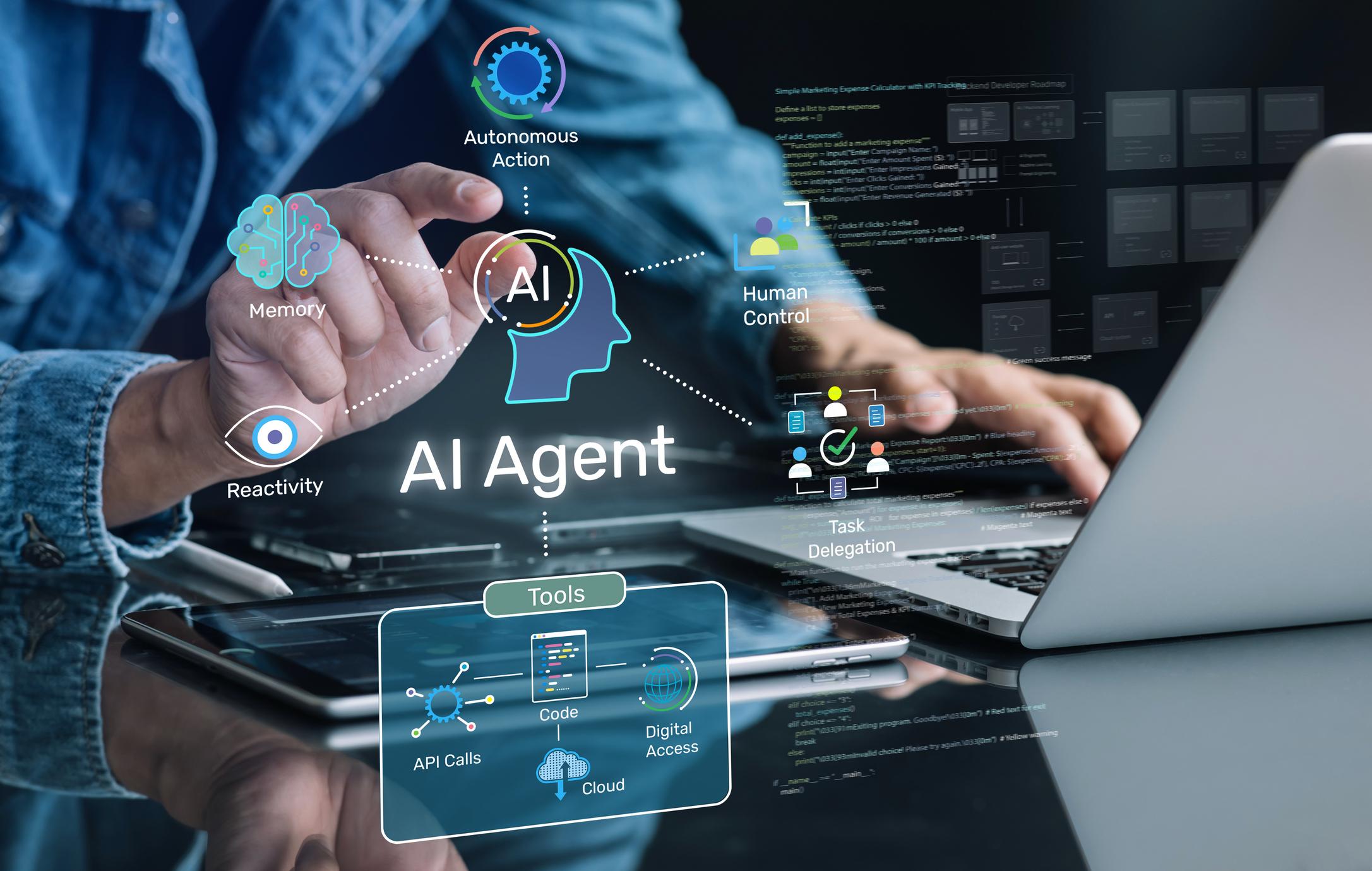
The web development landscape is undergoing one of the most profound transformations since the rise of JavaScript frameworks. Artificial Intelligence is no longer a supporting tool—it has become a co-creator, a decision-maker, and increasingly, an autonomous actor. At the center of this shift lies a powerful concept: Agentic AI.
From Tools to Teammates
Traditionally, developers relied on tools—IDEs, libraries, frameworks—to build applications. With the rise of AI, especially large language models and code generation systems, these tools have evolved into collaborators. AI can now:
- Generate entire components from simple prompts
- Debug and refactor code intelligently
- Suggest architectural improvements
- Automate repetitive workflows
This shift is not just about productivity—it’s about redefining how software is built.
What is Agentic AI???????
Agentic AI refers to systems that can act independently toward a goal, rather than simply responding to prompts. These AI agents can:
- Plan multi-step tasks
- Make decisions based on context
- Interact with APIs, databases, and external tools
- Learn and adapt over time
In web development, this means AI is no longer just generating code—it’s building, testing, deploying, and even maintaining applications autonomously.
How Agentic AI is Changing Web Development
1. Autonomous Development Pipelines
Imagine describing your app idea in plain English and watching an AI agent:
- Set up the project structure
- Write backend APIs
- Design frontend UI
- Deploy to the cloud
Agentic AI can orchestrate entire development pipelines with minimal human intervention.
2. Intelligent Debugging and Monitoring
Instead of manually tracing bugs, AI agents can:
- Detect anomalies in real-time
- Identify root causes
- Apply fixes automatically
This leads to faster, more reliable applications with reduced downtime.
3. Personalized User Experiences
AI-driven systems can dynamically adapt UI/UX based on user behavior:
- Real-time content personalization
- Adaptive layouts
- Predictive interactions
This creates highly engaging and responsive web applications.
4. Rapid Prototyping and Innovation
Startups and developers can now:
- Build MVPs in hours instead of weeks
- Test ideas quickly
- Iterate based on AI-driven insights
The barrier to innovation is dramatically lowered.
Challenges and Considerations
While the benefits are massive, the rise of Agentic AI also brings challenges:
- Control & Reliability: Autonomous systems must be predictable and safe
- Security Risks: AI-generated code may introduce vulnerabilities
- Ethical Concerns: Decision-making by AI needs transparency
- Skill Shift: Developers must evolve from coders to system designers and AI supervisors
The Future: Human + AI Collaboration
The future of web development is not about AI replacing developers—it’s about augmenting human capability. Developers will:
- Focus more on problem-solving and creativity
- Guide and supervise AI agents
- Design systems rather than write every line of code
Agentic AI will act as a force multiplier, enabling individuals and teams to build more powerful applications than ever before.