.svg)
.svg)
 For Instructor
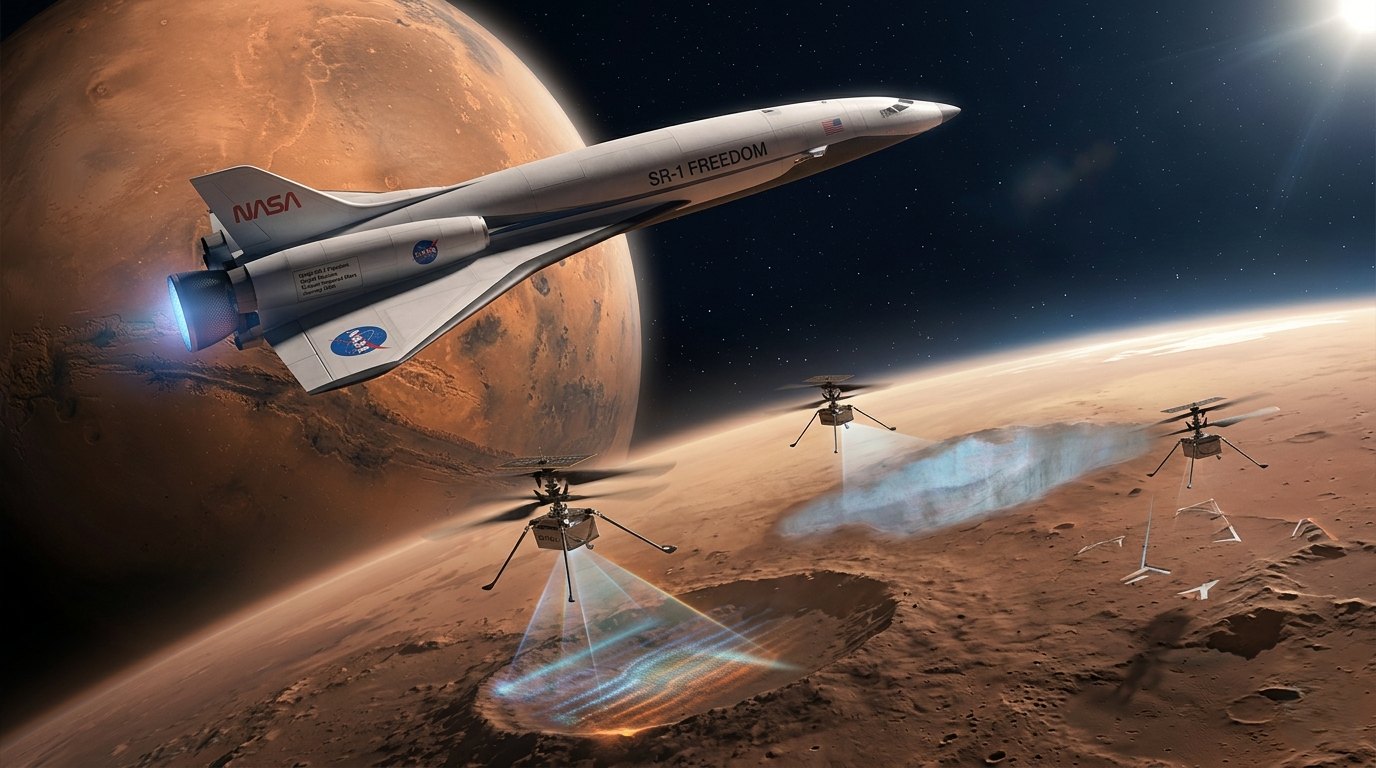
Imagine cutting months off a road trip just by swapping out your engine. Well, NASA is doing exactly that, but for a 140-million-mile trip to the Red Planet.
For decades, we’ve relied on chemical rockets—the kind that give a massive "oomph" at the start but then coast for most of the journey. NASA's newly announced SR-1 Freedom mission, set for late 2028, is changing the game. It’s ditching the old-school fuel for Nuclear Electric Propulsion (NEP).
Why Nuclear?
Think of it like a hybrid car versus a drag racer. While traditional rockets give one big burst of speed, this 20-kilowatt nuclear reactor provides a steady, continuous push. It might feel "less intense" at first, but because it never stops accelerating, it makes the trip significantly faster and more efficient. Plus, it doesn’t need the sun to work, which is a huge win when you're headed into the dark reaches of deep space.
Meet the "Skyfall" Squad
The coolest part of the mission? The Skyfall helicopters. The SR-1 Freedom will carry three autonomous choppers that will deploy mid-air once they reach Mars. Their job is to be the ultimate scouts:
- Finding Water: Using ground-penetrating radar to find ice hidden under the surface.
- Safety First: Mapping out landing zones for future human missions.
- Eyes in the Sky: Scouting hazards that rovers on the ground might miss.
The Big Challenge
Building a nuclear reactor is hard. Building one small and light enough to fly is even harder. As the experts say, if the power plant weighs more than the fuel you’re saving, it’s a wash. But NASA is optimistic that they can shrink this tech down by 2028.
If this works, it’s not just about one mission. It’s the blueprint for how we’ll eventually get humans to Mars and beyond.