.svg)
.svg)
 For Instructor
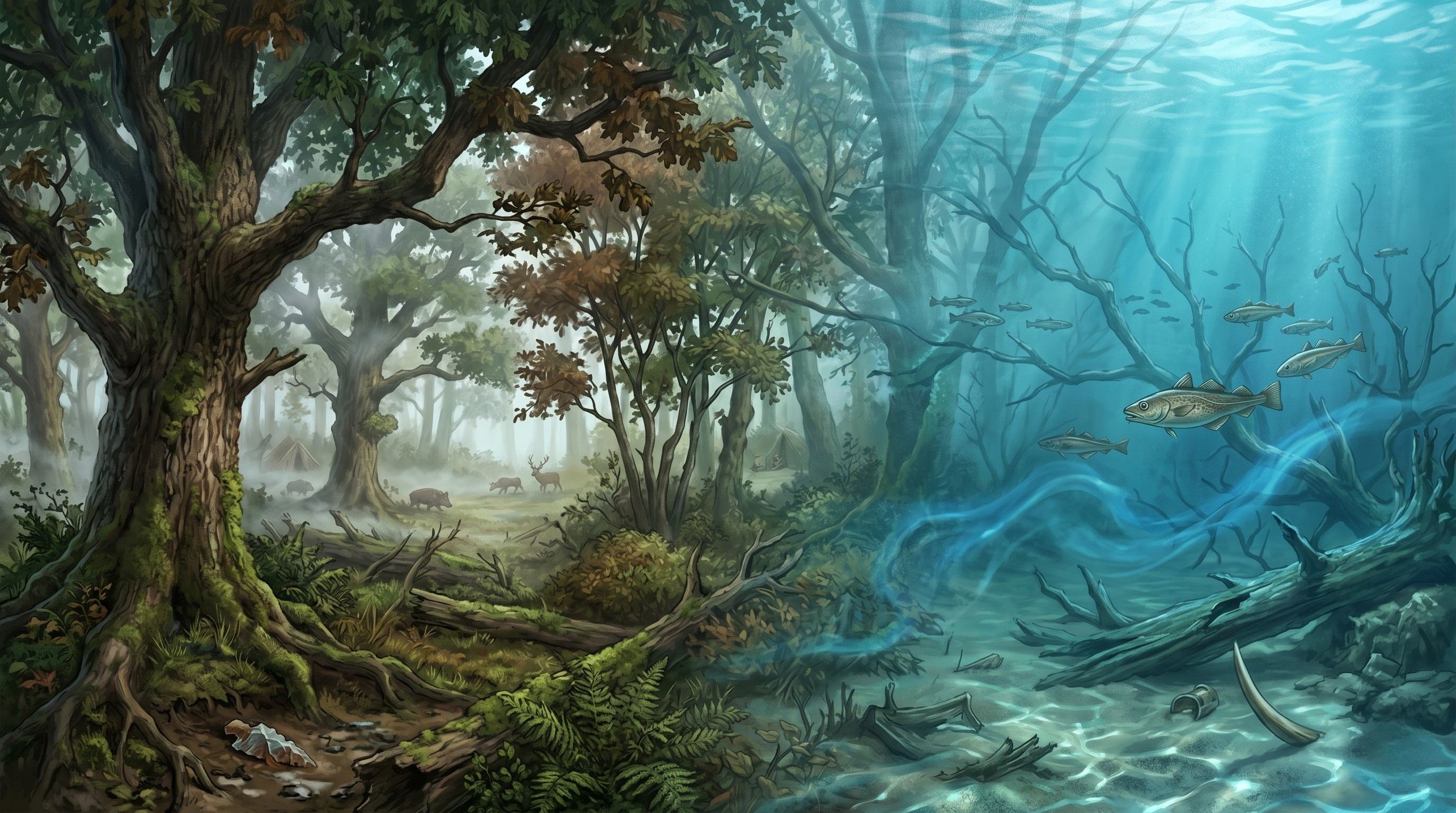
Picture walking on land that used to connect mainland Europe to Great Britain. If you were to do this today, you would either have to fly, take a ferry, or take the very long train ride through the Channel Tunnel (The Eurotunnel). However, as recently as 16,000 years ago, you would have been able to walk there.
This area, also known as Doggerland, used to be thought of as a frozen tundra—and a so-called "frozen wasteland"—until recently. New information from researchers at the University of Warwick has completely turned this way of thinking upside down. Instead of being merely a land connection between Europe and Great Britain, researchers have discovered that Doggerland was an extremely vibrant, fertile, and green area.
The Rediscovery of 'Lost War': How the Last World's Forests Invented Themselves?
Many scientists once presumed that following the last Ice Age had finished melting, it would take millions of years until the Earth would have totally 'reset' itself, with forests starting to spread across Northern Europe only at some time in the far off future when weather will be much warmer. However, recent studies of sediment core samples obtained from North Sea reveal that researchers have discovered the presence of oak, elm and hazel tree DNA (discovered over 16,000 years ago in what is now known as 'Doggerland'), some time before all these previous theorised dates would have been. This suggests an alternate hypothesis that long before all parts ofEurope are expecting their first forests again, Doggerland had become a major pioneer for life and with many forested, populated, and independent ecosystems.
Why Is This Important To Know?
You may have wondered why we should pay attention to the drowned trees, called Doggerland, from the Stone Age. Doggerland represents an entire 'what-if' chapter in human history.
A Safe Haven: Since there were forests in Doggerland, there were animals; red deer, wild boar, and potentially mammoths.
The Human Relationship: Wherever there was shelter (forests) and food (wildlife), humans were likely to be present. Early hunter-gatherers likely lived in Doggerland, rather than just passing through.
What We Learn About Our Environment: Because of rising sea levels, Doggerland ceased to exist. By examining how this area transitioned from a forest to a seabed, we can learn more about how our Earth responds to significant changes in climate.
The Underwater Mystery
Doggerland is buried under depths of saltwater and sand, so occasionally fishermen will find ancient bones or stone tools in their nets.
This research reminds us that the way we understand our world is always changing. We see the North Sea today as a cold, grey body of water. But at one time, it was an area filled with rustling trees, singing birds, and the smoky remnants of ancient camps; when you sail a boat across the North Sea, you are sailing across an unfinished page in your own story.
Next time you see the sea, keep in mind that there may be more than just water (and some forgotten civilization) sleeping quietly below the water.